
bus route optimization, Dispatch Software, asset school bus tracking system, best gps device for school bus, driver navigation, easy gps tracker for school bus
It’s Tuesday, March 24, 2026, and if you had asked a transportation director five years ago how they planned their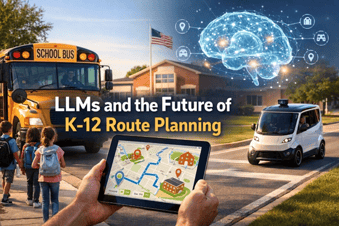 morning routes, they probably would have talked about manual spreadsheets, legacy software, and a whole lot of local knowledge stored in the heads of veteran drivers. Fast forward to today, and the conversation has shifted dramatically.
At BusBoss, we’ve always been about staying ahead of the curve to keep students safe and districts efficient. Right now, that "curve" is shaped like a Large Language Model (LLM). While most people think of LLMs like ChatGPT or Gemini as tools for writing emails or generating lesson plans, their integration into K-12 route planning is quietly revolutionizing how we get kids to school.
What Does an LLM Have to Do with a School Bus?
At its core, an LLM is a master of pattern recognition. It doesn’t just "know" words - it understands the relationships between massive amounts of data points. When you apply that logic to school bus routing, you move from simple GPS mapping to a dynamic, intelligent system that thinks several steps ahead.
Traditional routing software is great at calculating the shortest distance between Point A and Point B. But as any transportation veteran knows, the "shortest" route isn't always the fastest, the safest, or the most cost-effective. This is where LLMs come in. By processing unstructured data: everything from historical traffic patterns and weather forecasts to parent feedback and local construction schedules, LLMs can suggest optimizations that human planners might miss.
Solving the "Impossible" Routing Puzzle
K-12 transportation is arguably the most complex logistical challenge in any community. You aren't just moving packages, you’re moving precious cargo with specific needs, tight schedules, and a shrinking pool of resources.
1. Navigating the Driver Shortage
We’ve spent years discussing just how serious the school bus driver shortage is. While we can’t use AI to magically conjure up new drivers, LLMs help us do more with less. By analyzing route density and student load patterns, these models can consolidate routes in ways that maintain service levels while requiring fewer active vehicles. It’s about working smarter, not harder.
2. Real-Time Pattern Analysis
Imagine a system that learns from every single trip. If an LLM notices that Bus 14 is consistently three minutes late on Tuesday mornings due to a local trash collection route, it doesn’t just flag the delay: it suggests a proactive reroute for the following week. This level of predictive analysis is a game-changer for lowering transportation costs and improving parent satisfaction.
3. Special Education and Inclusive Solutions
One of the most sensitive areas of routing is special education. These routes often require specific vehicle types and equipment, along with varying student requirements. LLMs excel at balancing these complex variables. By integrating these models, we can ensure that inclusive transportation solutions are prioritized, making sure every student gets the care they need without compromising the efficiency of the entire fleet.
Safety: The Ultimate Priority
Safety isn’t just about the bus - it’s about the environment around the bus. We’ve seen states like Indiana work tirelessly to improve school bus stop safety, and LLMs are becoming a key ally in this mission.
By analyzing historical accident data, local crime maps, and even lighting conditions at specific times of the year, an LLM-powered routing system can flag potentially hazardous stops. If a stop is located on a high-speed curve or in an area with poor visibility during winter mornings, the system can automatically suggest a safer alternative. This isn't just technology for the sake of technology - it’s technology for the sake of our children.
Talking to Your Data
Perhaps the most "casual" and user-friendly aspect of LLM integration is the shift toward natural language interfaces. For decades, transportation directors had to be part-time data scientists to pull complex reports from their software.
In the near future, and through the innovations we’re working on here at BusBoss, you won’t need to navigate five sub-menus to find an answer. You’ll simply ask: "Which of our routes are consistently over capacity on Friday afternoons?" or "How would adding a 10th stop to Route 4 affect our fuel budget?"
The LLM processes the query, digs through the database, and provides a conversational, data-backed answer in seconds. This allows staff to focus on what they do best: managing people and ensuring student safety, rather than fighting with a user interface.
The BusBoss Leadership in AI Integration
As a leader in software development for the K-12 space, Orbit Software Inc. (BusBoss) is at the forefront of this transition. We recognize that the future of routing isn't just about better maps - it's about better intelligence.
We are currently exploring how LLMs can streamline the communication gap between schools and parents. We know that communication between parents and transportation is vital. By using LLMs to synthesize route changes and send personalized, automated updates to parents, we can reduce the volume of frantic "Where is the bus?" phone calls to the front office.
Efficiency Beyond the Map
Efficient routing saves money, and in a time of fluctuating budgets, every penny counts. When we look at how a transportation routing software system lowers costs, we often focus on fuel and maintenance. However, LLMs add a layer of "administrative efficiency."
By automating the mundane tasks of route adjustment and data entry, we free up transportation coordinators to tackle higher-level issues, such as training school bus drivers for city driving or developing safe driving incentives.
The Road Ahead: A Summary
The integration of Large Language Models into K-12 route planning represents a shift from reactive management to proactive strategy. To summarize the benefits:
- Dynamic Optimization: Moving beyond static maps to routes that adapt to real-world patterns.
- Safety Enhancements: Using data to identify and mitigate risks before they lead to accidents.
- Resource Management: Maximizing the efficiency of a limited driver pool and aging fleets.
- Accessibility: Allowing staff to interact with complex data using simple, natural language.
We are entering an era where the software doesn't just record where the bus goes: it helps you decide where the bus should go to achieve the best results for your students, your staff, and your budget.
Ready to Modernize Your Fleet?
The future of transportation isn't a distant dream - it's being coded right now. At BusBoss, we’re dedicated to providing the tools you need to navigate these technological shifts with confidence. Whether you’re looking to solve a driver shortage or simply want to find the most efficient way to get your kids home, we’re here to help.
Are you curious about how AI and advanced routing can transform your district?
Contact the BusBoss team today for a live demo and see how our latest innovations can put your district on the map!
Click here to request a live demo of our products.

PRESIDENT
Sonia has been involved with BusBoss since the late 1990’s, and has personally overseen many projects for various customers ranging from large urban and suburban districts to smaller rural school districts from all over the country.
 (484) 941-0820