

bus route optimization, Dispatch Software, asset school bus tracking system, best gps device for school bus, driver navigation, easy gps tracker for school bus
If you've ever spent hours manually compiling transportation data for state reporting, you know the frustration.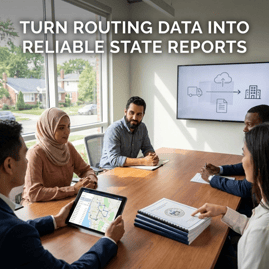 Spreadsheets are scattered across multiple files. Numbers that don't quite add up. Deadlines are looming while you're still double-checking mileage figures.
Here's the thing: your routing software already has all the data you need. The trick is knowing how to turn it into reports that satisfy state requirements without losing your mind in the process.
Why State Reporting Matters More Than You Think
State reports aren't just bureaucratic busywork. They directly impact your district's funding. Many states calculate transportation reimbursements based on reported mileage, ridership numbers, and route efficiency. Get those numbers wrong, and you could be leaving money on the table, or worse, facing compliance issues down the road.
Accurate reporting also helps you make the case for budget increases, new buses, or additional staff. When you can present clear data on student ridership trends and route demand, administrators and school boards pay attention.
The Problem with Manual Reporting
Traditional reporting methods create headaches at every turn:
- Data lives in silos. Driver logs are separate from route plans, which are separate from student enrollment lists.
- Human error creeps in. Transcribing numbers from one system to another invites mistakes.
- It takes forever. Hours spent on reporting are hours not spent improving operations.
- Consistency suffers. Different staff members may calculate metrics differently, leading to inconsistent year-over-year comparisons.
Sound familiar? You're not alone. Districts across the country struggle with these exact challenges.
How Routing Software Changes the Game
Modern routing software like BusBoss doesn't just plan routes: it captures and stores every piece of data you need for state compliance. Miles traveled, students transported, stops made, times recorded. It's all there, updated in real time.
The key is leveraging that data effectively. Here's how:
1. Centralize Your Data
Stop juggling multiple spreadsheets. Your routing software should serve as your single source of truth. When all route information, student assignments, and mileage data live in one place, generating reports becomes straightforward.
2. Automate Calculations
Let the software do the math. Whether your state requires average daily ridership, total annual mileage, or cost-per-student calculations, automated systems eliminate manual number-crunching and reduce errors.
3. Use Built-In Report Templates
Many routing platforms offer pre-built report templates designed for common state requirements. These templates pull directly from your routing data, formatting everything according to state specifications.
4. Schedule Regular Data Audits
Don't wait until reporting season to check your data quality. Regular audits help catch discrepancies early, like routes that haven't been updated after boundary changes or students who've transferred but remain on old rosters.
What Data Points Matter Most?
While requirements vary by state, most transportation reports ask for some combination of:
- Total route miles (daily, monthly, annually)
- Number of students transported
- Number of routes operated
- Vehicle information and capacity
- Special needs transportation statistics
- Fuel consumption and costs
Your routing software tracks most of these automatically. The challenge is knowing where to find them and how to export them in the right format.
For guidance on related compliance topics, check out our post on creating a culture of safety in school bus operations.
Tips for Cleaner, Faster Reports
Start with clean data. Garbage in, garbage out. Make sure student addresses are current, routes are optimized, and vehicle assignments are accurate before pulling reports.
Document your process. Create a simple checklist for report generation so anyone on your team can handle it consistently.
Keep historical records. Year-over-year comparisons help you spot trends and justify funding requests. Plus, auditors love seeing organized historical data.
Ask for help when needed. Your software provider should offer training and support for reporting features. Don't struggle alone when expert guidance is available.
The Bottom Line
State reporting doesn't have to be a nightmare. When you harness the routing data you're already collecting, reports practically write themselves. You'll spend less time buried in spreadsheets and more time doing what actually matters: getting students to school safely and efficiently.
Ready to simplify your reporting process? Explore how BusBoss can help your district turn routing data into reliable, compliant state reports with less hassle.
Key Takeaways:
- Your routing software already contains the data you need for state reports
- Centralizing data and automating calculations reduces errors and saves time
- Regular data audits prevent last-minute reporting headaches
- Accurate reports protect your funding and support budget requests
Click here to request a live demo of our products.

PRESIDENT
Sonia has been involved with BusBoss since the late 1990’s, and has personally overseen many projects for various customers ranging from large urban and suburban districts to smaller rural school districts from all over the country.
 (484) 941-0820