

bus route optimization, Dispatch Software, asset school bus tracking system, best gps device for school bus, driver navigation, easy gps tracker for school bus
It’s April 2026, and the landscape of school transportation has changed more in the last two years than it did in the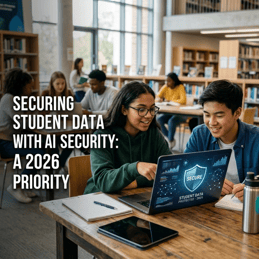 previous twenty. We aren’t just moving buses anymore; we’re managing massive streams of real-time information. Between AI-optimized routing, student ridership tracking, and electric fleet telemetry, our districts are digital hubs.
But with all that data comes a significant responsibility. As we lean more into automation, cybersecurity has moved from the "IT department's problem" to a top-tier priority for transportation directors. In 2026, protecting student data isn’t just about firewalls; it’s about using AI protection to fight AI-powered threats.
The New Reality: Why 2026 is Different
For years, we worried about physical safety on the bus, and we still do. We focus on how a student tracker protects your school and ensures no child is left behind. But today, the "bus stop" has a digital twin.
Hackers aren't just looking for credit card numbers anymore. They are targeting student ridership data, like names, home addresses, pickup times, and even behavioral notes. In the wrong hands, this information is a safety nightmare. According to recent industry surveys, over 51% of educators believe that cyberattacks will only increase in severity this year because bad actors are now using Generative AI to create hyper-realistic phishing emails and deepfake voice clones to bypass traditional security.
AI as the Shield: How We Fight Back
If the "bad guys" are using AI to find holes in our systems, we have to use AI to plug them. AI protection in 2026 is proactive, not reactive. Here’s how AI is currently being used to secure school transportation systems:
1. Behavioral Anomaly Detection
Traditional security looks for "known" viruses. AI looks for "weird" behavior. If a staff member usually logs in from Pennsylvania at 8:00 AM but suddenly tries to download the entire student ridership list from an IP address in another country at 2:00 AM, the AI flags it instantly. This real-time monitoring is essential for protecting student ridership collections from internal and external leaks.
2. Automated Phishing Defense
Phishing is still the #1-way hackers get in. In 2026, these emails look perfect, no more typos or weird formatting. AI-driven email filters now "read" the intent of the message, identifying social engineering tactics that a human eye might miss.
3. Securing the "Internet of Buses"
Every GPS unit and stop-arm camera is a potential entry point for a cyberattack. AI helps manage these "endpoints" by ensuring every device on the network is authenticated and running the latest security patches without requiring a manual check from your busy IT staff.
The Vendor Problem: Is Your Software Safe?
One of the biggest risks districts face today is "shadow AI", staff or departments using free, unvetted AI tools to process school data. When you upload a spreadsheet of student routes into a free AI tool to "clean it up," that data might be used to train a public model. Suddenly, your students' private info is part of a giant, public database.
This is why choosing the right partners is critical. When evaluating school bus routing software, you need to ask tough questions about data governance. At BusBoss, we believe reliability starts with security.
When you look through our 10-questions guide for choosing software, make sure you include these three "2026-specific" questions:
- Does our data train your AI? (The answer should be a firm "no.")
- How long is student data retained? (Minimal retention is best.)
- Who owns the insights generated by the AI? (The district should always own the data.)
Cybersecurity is a Team Sport
We’ve seen that the most secure districts in 2026 are the ones that treat cybersecurity as a shared responsibility. It’s not just for the tech team; it’s for the drivers, the routers, and the administrative assistants.
Practical Steps for Your District:
- Enforce Multi-Factor Authentication (MFA): It seems simple, but it’s still one of the most effective ways to stop unauthorized access.
- Audit Your Data Silos: Use AI tools to find where student data is being stored. Often, data is hidden in old spreadsheets or abandoned software accounts. Automating your data management can actually make it easier to secure because you have fewer places to watch.
- Train Your Team on Deepfakes: Make sure your staff knows that a phone call from "the Superintendent" asking for a data export might not actually be the Superintendent. Always verify through a second channel.
- Vet Every Plugin: If a staff member wants to use a new AI "assistant" to help with routing, it must go through a formal security review.
The Future of Safe Routing
As we navigate complex urban route scenarios, the goal remains the same, getting kids to school safely and efficiently. But in 2026, "safe" includes the digital world. By embracing AI-driven cybersecurity, we can enjoy the massive benefits of automation, like shorter routes and better parent communication, without compromising the privacy of the families we serve.
Summary & Key Takeaways
- AI-Powered Threats are Real: Phishing and deepfakes are more sophisticated than ever.
- AI Protection is the Solution: Use AI to monitor for anomalies and secure your connected fleet.
- Data Sovereignty Matters: Ensure your software vendors aren't using your student data to train public models.
- Human Elements Remain Key: Training and MFA are still your best first lines of defense.
Are you ready to upgrade your district's security and efficiency?
Don't leave your student data to chance. Contact the BusBoss team today to learn how our secure, AI-ready routing solutions can protect your district in 2026 and beyond.

PRESIDENT
Sonia has been involved with BusBoss since the late 1990’s, and has personally overseen many projects for various customers ranging from large urban and suburban districts to smaller rural school districts from all over the country.
 (484) 941-0820