

bus route optimization, Dispatch Software, asset school bus tracking system, best gps device for school bus, driver navigation, easy gps tracker for school bus
It’s 7:15 AM on a rainy Tuesday. One of your veteran drivers hit an unexpected detour due to a downed power line, and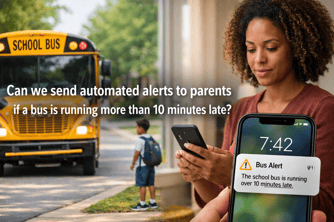 Bus #42 is now sitting in a standstill. Back at the transportation office, the phone lines start lighting up like a Christmas tree.
"Where is the bus?"
"Is my child safe?"
"Did we miss it?"
As a Transportation Director, you know that the "10 minute mark" is the tipping point. If a bus is five minutes late, parents usually wait. Once it hits ten minutes, the panic sets in. The question is, Do you have to be the one to answer all 40 of those phone calls, or can your software do it for you?
The short answer? Yes, you absolutely can. And honestly, in today’s world, you probably should.
The Power of the 10-Minute Alert
When a bus runs more than 10 minutes behind, it’s rarely just a minor inconvenience for parents, it’s a disruption to their workday and a source of anxiety regarding their child’s safety. Why communication between parents and transportation is so important cannot be overstated; it builds trust and keeps the community calm.
Automated alerts change the dynamic from "reactive" to "proactive." Instead of your staff scrambling to answer phones while simultaneously trying to radio the driver, an automated system identifies the delay via GPS and pushes a notification directly to the parents' smartphones or via SMS.
How Does Technology Work?
It might sound like magic, but it’s actually a straightforward combination of GPS tracking and "geofencing."
- GPS Integration: Your fleet is equipped with GPS units that relay real-time location data to your routing software.
- The Schedule Comparison: The software constantly compares the bus’s actual location against its planned schedule.
- The Trigger: You set a rule in the system. For example: "If a bus has not reached Stop X within 10 minutes of its scheduled time, trigger a notification."
- The Delivery: The system identifies which students are assigned to that route and sends an automated alert to their registered parents.
This technology is a lifesaver, especially when you consider just how serious the school bus driver shortage is right now. With fewer drivers and more double run routes, delays are becoming more common. Automation ensures that your office staff isn't overwhelmed by the consequences of that shortage.
Reducing the "Phone Tree" Chaos
Research shows that SMS notifications have a staggering 98% open rate, usually within minutes. Compare that to a parent trying to find a "Late Bus" notice buried on a district website. By pushing the information directly to them, you solve the problem before they even have a chance to pick up the phone.
Some districts using automated parent apps have reported a 25% reduction in daily phone calls. Think about what your team could accomplish with 25% more time back in their day. Instead of acting as a manual switchboard, you can focus on fleet maintenance, safety training, and optimizing routes to save the district money.
What Should You Look For in an Alert System?
If you are currently evaluating your options, you need to make sure the system is robust enough to handle real-world variables. We recommend checking out our guide on learning the best questions to ask when considering a student bus tracking system.
At a minimum, your system should offer:
- Customizable Thresholds: Not every delay needs an alert. You should be able to choose if parents are notified at 5, 10, or 15 minutes.
- Real-Time Map Views: Let parents see exactly where the bus is so they can decide if they have time to grab that second cup of coffee.
- Multi-Channel Support: Alerts via app push notifications, text messages, or email.
Safety First, Convenience Second
While convenience is the biggest selling point for parents, safety is the priority for the district. When a bus is late and parents aren't informed, children are often left standing at stops in inclement weather or in the dark. By providing real-time updates, you ensure students spend less time at the curb and more time in the safety of their homes until the bus is actually around the corner.
Take the Next Step with BusBoss
Managing a fleet is hard enough without the added stress of a communication breakdown. Providing automated, real-time alerts isn't just a "nice-to-have" feature anymore; it’s an essential part of a modern, reliable transportation department.
If you’re tired of the morning phone-call frenzy and want to see how BusBoss can automate your parent communications, we’re here to help. Our tools are designed to integrate seamlessly with your routing and GPS data to keep everyone informed and safe.
Ready to see it in action? Contact us today for a live demo and let's get your parents the information they need, exactly when they need it.
Summary Checklist:
- Automate the 10-minute mark: Set triggers to notify parents only when delays become significant.
- Leverage GPS: Ensure your routing software and GPS are talking to each other.
- Reduce Office Stress: Stop the influx of "Where is the bus?" calls before they start.
- Prioritize Safety: Keep students out of the cold by providing accurate arrival times.
Schedule a BusBoss School Bus Routing Software Demo!

PRESIDENT
Sonia has been involved with BusBoss since the late 1990’s, and has personally overseen many projects for various customers ranging from large urban and suburban districts to smaller rural school districts from all over the country.

 (484) 941-0820