

bus route optimization, Dispatch Software, asset school bus tracking system, best gps device for school bus, driver navigation, easy gps tracker for school bus
In the world of school transportation, we often talk about "the precious cargo." It’s a phrase that reminds us why we do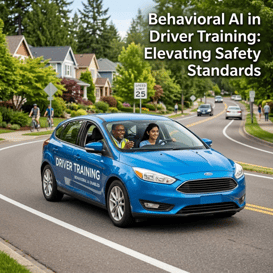 what we do. But behind the wheel of every yellow bus is a human being tasked with navigating tight turns, managing a bus full of energetic students, and staying alert for hours on end.
For years, driver training followed a standard script, a classroom session, a few weeks of behind-the-wheel practice, and an annual review. But as technology evolves, so does our ability to support our drivers. Enter Behavioral AI. This isn't just about tracking where a bus goes; it’s about understanding how it’s being driven and using those insights to create a safer, more supportive environment for everyone on board.
Beyond the "Beep": Understanding Behavioral AI
Most school districts are already familiar with basic GPS and telematics. These systems are great for telling you if a driver is speeding or if they hit the brakes too hard. However, traditional systems are reactive. They tell you something went wrong after it already happened.
Behavioral AI changes the game by looking at the "why" and the "how." By using machine learning to analyze data streams, ranging from engine telematics to advanced in-cab sensors, AI can identify micro-patterns in driving behavior.
For example, instead of just flagging a hard braking event, behavioral AI can detect if a driver is showing signs of school bus safety driver fatigue. It looks for subtle cues, minor steering corrections, inconsistent speed maintenance, or even eye-tracking patterns that suggest a driver’s focus is drifting. This shift from reactive monitoring to proactive safety refinement is the next frontier in pupil transportation.
The Power of Safety Metrics and Micro-Patterns
When we talk about safety metrics in the context of AI, we’re looking at much more than a leaderboard of "best drivers." We’re looking at data that can actually predict risk.
Research shows that behavioral AI can analyze body language and intent signals to anticipate actions before they occur. In a driver training context, this means we can identify a driver who struggles with hazard perception long before a "near miss" ever happens.
Key AI Feedback Points:
- Hazard Perception: Does the driver scan intersections effectively? AI can track visual search patterns to ensure they are looking for pedestrians and cyclists.
- Cognitive Load: Is the driver overwhelmed during heavy traffic? AI identifies hesitations that signal a lack of confidence or focus.
- Distraction Detection: It’s not just about cell phones. AI can detect when a driver is preoccupied with internal bus distractions, such as dealing with bullies on the bus, and help them manage their focus.
By capturing these metrics, transportation managers can move away from generic training and toward personalized development plans.
Transforming Training with AI Feedback
The traditional "one-size-fits-all" training manual is becoming a thing of the past. One of the most significant benefits of AI in driver training is the ability to provide AI feedback that is immediate and, relevant.
Imagine a new driver finishing their afternoon route. Instead of waiting for a quarterly review, they receive a summary of their performance on their tablet. The AI highlights that they’ve been accelerating a bit too quickly out of stops on the north side of town, perhaps due to the hill gradients, and offers a 30-second "micro-training" video on how to manage throttle on inclines.
This level of personalized driver training makes drivers feel supported rather than scrutinized. It’s the difference between being "watched" and being "coached." When drivers see that the technology is there to help them stay safe and professional, buy-in increases across the fleet.
Reducing Risk and Increasing Retention
We know that the driver shortage is one of the biggest hurdles facing school districts today. High-stress environments and the fear of making a mistake can drive good people away from the profession.
Behavioral AI helps alleviate this stress by:
- Providing a Safety Net: Drivers feel more confident knowing they have a system that warns them of fatigue or potential hazards.
- Removing Subjectivity: Evaluations are based on clear data rather than a supervisor’s "gut feeling."
- Positive Reinforcement: AI systems are great at catching drivers doing things right. Celebrating a month of perfect visual scanning at crosswalks goes a long way toward morale.
For districts looking to modernize, understanding how school management systems operate alongside these AI tools is crucial for creating a cohesive safety culture.
Integrating AI with Your Existing Tech Stack
You don't need to reinvent the wheel to start benefiting from behavioral AI. Most modern bus GPS systems are becoming increasingly compatible with AI-driven coaching platforms. The key is integration.
When your routing software, student tracking, and driver coaching tools talk to each other, you get a 360-degree view of your operation. For instance, if the AI detects that a particular intersection consistently triggers "hard braking" alerts across multiple drivers, you might realize the problem isn't the drivers; it’s the route. You can then use your routing software to adjust the stop location for better visibility and safety.
This synergy between data and action is what sets high-performing districts apart. It also helps address parental concerns regarding student tracking by showing that the district is invested in the highest levels of safety technology available.
Summary: The Future is Proactive
The goal of implementing behavioral AI in driver training is simple, to ensure every student arrives at school and home safely. By moving from reactive punishment to proactive coaching, school districts can:
- Identify and correct risky driving habits before they lead to accidents.
- Provide drivers with the personalized support they need to excel.
- Use data-driven safety metrics to optimize routes and stop locations.
- Improve driver retention by fostering a culture of professional growth.
As we look toward the future, the integration of AI isn't just a "nice to have"; it’s becoming a standard for excellence in pupil transportation.
Want to see how your current safety measures stack up?
Explore our BusBoss Competitive Analysis to see how we help districts stay ahead of the curve, or use our Savings Calculator to see how optimized routing and safety can impact your bottom line.
Let's prioritize your precious cargo together. Contact the BusBoss team today to learn more about how our solutions support the next generation of driver safety.

PRESIDENT
Sonia has been involved with BusBoss since the late 1990’s, and has personally overseen many projects for various customers ranging from large urban and suburban districts to smaller rural school districts from all over the country.
 (484) 941-0820