

bus route optimization, Dispatch Software, asset school bus tracking system, best gps device for school bus, driver navigation, easy gps tracker for school bus
Play blog summary Listen
For transportation directors, a student boarding record is more than a data point. It can help confirm where a student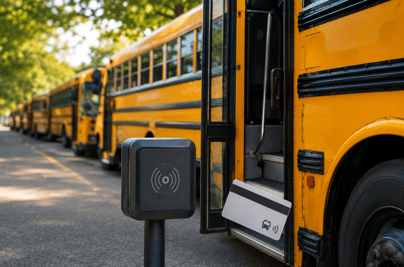 was, support emergency response, answer parent questions, and inform route planning decisions.
Yet many districts discover that their student ridership verification systems are not as accurate as expected. Records may show a student on the wrong bus. A boarding event may be missing. A student may appear twice. These issues become more common as enrollment, routes, schools, and transportation providers grow.
The good news is that most errors have identifiable causes. With integrated transportation data practices, districts can improve ridership data accuracy and give staff a clearer view of daily operations.
Why boarding data becomes inaccurate
Student boarding information moves through several connected steps. A student record must be correct in the student information system. The route assignment must be current. The driver must have the correct roster. The onboard device must capture the event. Finally, the record must reach the transportation office.
A problem at any point can create an inaccurate result.
The most common causes include the following.
1. Outdated student and route records
Large districts manage frequent changes. Students enroll, withdraw, move, change schools, or receive new transportation assignments. When these updates move slowly between systems, the driver may see an old roster.
This can result in several types of errors.
- A newly assigned student does not appear on the driver’s list.
- A withdrawn student remains active in the transportation system.
- An address change does not update the assigned stop.
- A student is linked to the wrong route or school.
- A student has duplicate records under different identification numbers.
Manual file transfers make these issues harder to detect. Automated tools such as BusBoss LiveSYNC and BusBoss SIF Agent help move student changes between the student information system and transportation software. This reduces duplicate entry and gives transportation teams a more dependable record to work from.
2. Disconnected systems create conflicting records
A district may use one platform for student information, another for routing, a separate GPS product, and a different tool for boarding verification. Each system may store its own version of the student, route, stop, and vehicle data.
When these systems do not share updates consistently, staff must compare records manually. This takes time and creates uncertainty during busy loading periods.
An integrated approach connects routing, vehicle location, and student activity. For example, STUDENTpatrol GPS tracking can connect student boarding and exit events with bus and route information. TRIPpatrol adds vehicle location and route history, helping staff compare planned activity with what actually happened.
3. Verification rules do not reflect daily operations
Student boarding verification must match the way a district actually operates. Shared stops, transfer routes, special education transportation, activity runs, and substitute buses can all create valid exceptions.
If the system is configured too strictly, staff may receive too many alerts. If it is configured too loosely, important issues may go unnoticed. Over time, frequent false alerts can cause users to ignore the entire warning process.
Transportation leaders should review rules for wrong bus events, wrong stop events, unassigned riders, duplicate scans, and missing scans. Each alert should have a clear response. A dispatcher should know who investigates it, when it is corrected, and how the correction is documented.
4. Hardware and connectivity problems
Cards, readers, tablets, and cellular connections all affect boarding records. A student may forget or damage a card. A reader may fail to recognize a scan. A tablet may lose power. A bus may travel through an area with limited connectivity.
Drivers then rely on manual entry or paper notes. These workarounds are understandable, especially when a route is already under pressure. However, they increase the chance of missed or duplicated records.
A strong process includes regular device checks, spare equipment, clear offline procedures, and a simple method for correcting records after a connection returns. ROUTEpatrol Tablet App supports driver workflows that include navigation and student ridership collection.
5. Inconsistent staff training
Even capable drivers and dispatchers may use different processes when training is informal. One driver may record a student manually when a card is missing. Another may skip the event and report it later. Substitute drivers may not know how to respond to a wrong bus alert.
Training should focus on real situations rather than only standard procedures. Include examples such as a lost card, a changed route, a student boarding a substitute bus, and a device working offline.
It also helps to give dispatchers a shared view of current information. ROUTEpatrol Web supports browser based collaboration, while DISPATCHpatrol helps teams manage daily route changes and communicate updates to drivers.
A practical plan to reduce boarding errors
Transportation directors can improve data quality by taking these steps.
- Define the source of truth
Establish which system owns student identity, route assignments, stops, and boarding events. - Automate data transfers
Use monitored integrations instead of relying on manual exports and imports. - Track exceptions every day
Review missing scans, wrong bus alerts, duplicate records, and unassigned riders before patterns grow. - Test hardware regularly
Check readers, tablets, power connections, and cellular performance across the fleet. - Train for exceptions
Give drivers and substitutes clear instructions for common problems. - Review records against operations
Compare boarding activity with route loads, vehicle locations, and driver reports. - Protect access to student information
Use role based access and established district policies for sensitive data.
Why parent communication depends on accurate data
Families need timely and dependable information. If boarding records are incomplete, parent notifications may be delayed or incorrect. This can lead to unnecessary calls to the transportation office and reduce trust in the system.
With accurate data flowing through an integrated platform, PARENTpatrol can provide bus locations, estimated arrival times, and notifications related to student boarding and exit events.
Summary and next steps
Student boarding errors rarely come from one source. They usually result from outdated rosters, disconnected platforms, unclear verification rules, device problems, or inconsistent procedures. These challenges are more difficult to manage in enterprise school districts, where many schools, routes, and transportation teams must work from the same information.
The right school transportation technology should connect student records, routing, GPS tracking, driver tools, dispatch, and parent communication. It should also support ongoing system maintenance, training, and daily review.
If your district wants to improve boarding accuracy and gain a clearer view of student movement, schedule a BusBoss demo. A BusBoss specialist can show how integrated transportation data practices support safer and more accountable daily operations.

PRESIDENT
Sonia has been involved with BusBoss since the late 1990’s, and has personally overseen many projects for various customers ranging from large urban and suburban districts to smaller rural school districts from all over the country.
 (484) 941-0820