

bus route optimization, Dispatch Software, asset school bus tracking system, best gps device for school bus, driver navigation, easy gps tracker for school bus
Let’s talk about something that’s probably eating a hole in your district’s budget right now: idling.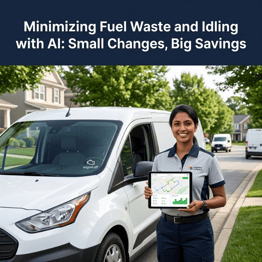
It seems harmless, right? A bus sits in the loading zone for fifteen minutes before the bell rings. A driver waits at a long intersection or a train crossing. It’s just a few minutes here and there. But when you multiply those minutes by fifty, eighty, or a hundred buses in a fleet, you’re not just blowing smoke, you’re burning through thousands of dollars.
In the world of school transportation, fuel is often the second-largest expense after labor. With budgets tightening and a growing push for sustainability, finding ways to cut fuel waste isn't just a "nice to have"; it’s a necessity.
The good news? Artificial Intelligence (AI) has turned what used to be a guessing game into a precise science. By using AI-driven sensors and route planning, school districts are seeing massive returns on relatively small operational changes.
The Invisible Drain: Why Idling is a Bigger Deal Than You Think
Before we dive into the high-tech solutions, we have to look at the problem. According to industry data, a typical school bus can burn through a half-gallon to a full gallon of fuel for every hour it spends idling.
If a bus idles for just 30 minutes a day, over a 180-day school year, that’s 90 gallons of fuel wasted per bus. At $3.50 or $4.00 a gallon, you’re looking at roughly $350 per bus, per year. In a fleet of 100 buses, that’s $35,000 literally evaporating into thin air.
But it’s not just about the gas. Excessive idling leads to:
- Engine Wear and Tear: Idling is actually harder on an engine than driving at highway speeds. It causes carbon buildup and can shorten the life of expensive components like fuel injectors and exhaust systems.
- Environmental Impact: School buses often idle right next to school buildings, where students congregate. Reducing those emissions is a direct win for student health.
- Maintenance Costs: More engine hours mean more frequent oil changes and filter replacements.
How AI Routing Software Flips the Script
Most districts know they have an idling problem, but without the right tools, it’s impossible to manage. You can’t stand at every bus stop with a stopwatch. This is where AI routing and transportation management come into play.
1. Smart Route Optimization
The most effective way to stop idling is to keep the wheels moving. AI doesn’t just draw a line from point A to point B; it analyzes massive datasets, including historical traffic patterns, road construction, and even time-of-day congestion, to create the most efficient path.
By optimizing these routes, districts can often reduce total mileage by up to 20% according to McKinsey research. Fewer miles means less time spent sitting in traffic, which naturally slashes idle time.
2. Predictive Analytics for "Dead Time"
AI can identify "bottlenecks" in your current routes that a human might miss. For example, the software might notice that a specific left-hand turn at 7:45 AM consistently results in a four-minute wait. The AI can then suggest a slightly longer physical route that takes less time and involves zero stationary idling.
The Power of Real-Time Sensors
To really tackle fuel waste, you need to know exactly what’s happening on the road. Modern AI-integrated GPS systems do much more than just track a dot on a map. They act as a digital nervous system for your fleet.
Real-Time Alerts
When a bus has been stationary with the engine running for more than a pre-set limit (say, three minutes), the system can send an immediate alert to the driver and the transportation office. This "nudge" is often all it takes to remind a driver to turn off the ignition during a long wait. These GPS systems also promote safer drivers by monitoring other fuel-wasting behaviors like harsh acceleration and speeding.
Driver Coaching and Gamification
Research shows that real-time coaching can reduce fuel costs by up to 15%. AI platforms can score drivers on their "eco-driving" habits. Many districts use this data to create friendly competitions, rewarding the drivers who achieve the lowest idle times. It turns a chore into a challenge, and the results show up directly on the bottom line.
Small Changes, Big Savings: A Case Study in Efficiency
Imagine a mid-sized district that implemented AI routing and sensor-based monitoring. In the first six months, they focused on three "small" changes:
- Re-sequencing stops to avoid a congested railroad crossing.
- Setting a strict 3-minute idle policy backed by real-time alerts.
- Using AI to consolidate half-empty routes.
The result? They saw a 12% reduction in total fuel spend. For a district spending $500,000 a year on diesel, that’s $60,000 back in the general fund. That’s enough to hire a new teacher, upgrade classroom technology, or put a down payment on a new electric school bus.
Sustainability is the New Standard
As more states and provinces push for "Green Fleet" initiatives, reducing fuel waste is the first and easiest step toward sustainability. Before you even think about the massive infrastructure changes required for a full EV transition, you can make your current internal combustion fleet significantly greener just by using better data.
AI-driven routing helps you prove your impact. You can generate reports showing exactly how many pounds of CO2 emissions were avoided through reduced idling. This data is gold when applying for environmental grants or presenting to the school board.
Frequently Asked Questions
Is the software hard for drivers to use?
Not at all. Most AI-driven tools work in the background. Drivers receive simple, helpful feedback via their tablets or mobile devices. The goal is to make their jobs easier, not more complicated.
Will AI routing actually work in a rural district?
Actually, rural districts often see the most benefit. When your routes are long, even a 5% increase in efficiency translates to a huge number of miles and gallons saved over a school year.
How do we start?
The first step is usually a competitive analysis to see how your current operations stack up against modern AI standards. From there, you can identify the "low-hanging fruit", those simple changes that lead to the fastest savings.
Summary: Your Roadmap to Savings
You don't need a massive overhaul to start saving money. By embracing AI and real-time data, you can:
- Identify where fuel is being wasted in real-time.
- Optimize routes to avoid traffic and unnecessary stops.
- Coach drivers toward more efficient habits.
- Reinvest those thousands of dollars back into your students.
At BusBoss, we’ve spent over 20 years helping districts navigate these complexities. Whether you're looking to cut idle time, improve safety, or get a handle on your ridership data, we have the tools to make it happen.
Ready to see how much you could save? Use our savings calculator to estimate your potential ROI or download our 10-questions guide to choosing the right routing software for your district.

PRESIDENT
Sonia has been involved with BusBoss since the late 1990’s, and has personally overseen many projects for various customers ranging from large urban and suburban districts to smaller rural school districts from all over the country.
 (484) 941-0820