

Student Tracking Software, student ridership, school bus software, Yellow School Bus, school bus reporting
When we think about student success, we usually focus on what happens inside the classroom. But here's the thing: the school day actually starts the moment a student steps onto the bus. And how that ride goes can set the tone for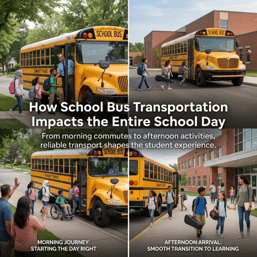 everything that follows.
School bus transportation isn't just about getting kids from Point A to Point B. It directly affects attendance, academic performance, mental health, and even equity across your district. Let's break down exactly how transportation ripples through the entire school day - and what you can do about it.
The Commute Sets the Stage
Think about your own commute. A smooth, predictable ride puts you in a good headspace. A long, frustrating one? Not so much.
Students are no different. Research shows that students who spend more time commuting report lower engagement than those with shorter trips. This isn't just about being tired: it affects how students connect with teachers and peers, how motivated they feel to learn, and how much effort they put into participating.
For charter school students especially, very long bus rides have been linked to decreased reading scores. That's a direct academic impact that starts before the first bell even rings.
Attendance: A Double-Edged Sword
Here's where it gets interesting. Reliable bus service actually increases attendance by removing logistical and financial burdens from families. When parents know their child has a consistent, safe ride to school, that's one less barrier to showing up every day.
But when bus rides become excessively long, the opposite happens. Studies show that extended commutes can decrease attendance andincrease chronic absenteeism - particularly among students exercising school choice options. And chronic absenteeism leads to learning loss that can beincredibly difficult to reverse.
The takeaway? Transportation reliability and efficiency aren't just operational concerns. They're attendance strategies.
Sleep, Health, and the Ripple Effect
Early morning pick-ups mean early wake-ups. And when you adda long commute on top of that, students lose precious sleep and homework time. This fatigue doesn't just make kids grumpy - it genuinely affects their ability to learn and retain information.
Extended bus travel times also contribute to worsened physical and mental health. The stress of unpredictable or lengthy commutes can diminish positive attitudes toward school before students even walk through the doors.
When a student arrives exhausted, anxious, or frustrated, they're not in the best position to engage with that first-period lesson. The effects compound throughout the day.
The Equity Factor
Transportation challenges don't affect all students equally. A staggering 41% of parents have reported that their district reduced or eliminated bus services in recent years. Nearly 8 in 10 families now drive their children or rely on family transportation as a result.
But not every family has that flexibility. Students most affected include those:
- Without parents who have flexible work schedules
- Lacking access to carpooling options
- Unable to walk or bike safely to school
- Already experiencing educational inequities
The burden of long bus rides is also disproportionately borne by Black students, adding another layer to existing achievement gaps. When we talk about creatinga culture of safety, we need to include equitable access to efficient transportation.
How Districts Are Adapting (and Struggling)
To manage driver shortages and budget constraints, many districts are staggering bus schedules and requiring individual drivers to run multiple routes. While this approach helps stretch limited resources, it also extends morning commutes.
That extra time on the bus compresses everything else: breakfast, socializing with friends, and mental preparation for the day ahead. Students arrive rushed instead of ready.
The solution isn't to eliminate buses or accept inefficiency as inevitable. It's to get smarter about optimizing school bus routes so that every student gets a reasonable, predictable commute.
What Can Your District Do?
The good news is that better transportation planning can address many of these challenges. Here are some practical steps:
1. Audit your current routes. How long are your longest rides? Which students are most affected? Data is your starting point.
2. Prioritize efficiency over convenience. Sometimes routes evolve organically over years and become bloated. A fresh look can reveal opportunities to cut travel time.
3. Invest in routing technology. Manual planning with spreadsheets can only take you so far. Modern routing software can analyze traffic patterns, student locations, and school schedules to create optimized routes that reduce commute times.
4. Communicate with families. When parents know what to expect - and have tools to track buses in real-time: it reduces stress foreveryone. Strong communication between parents and transportation builds trust andengagement.
5. Address the stranded student problem. Missed buse sand miscommunications create chaos. Having systems in place to solvethese issues quickly keeps the school day running smoothly.
The Bottom Line
School bus transportation isn't separate from academics: it's foundational to them. Every minute a student spends on an inefficient route is a minute they're not sleeping, not preparing, or not arriving in the right mindset to learn.
When districts invest in smarter routing and better communication, they're not just improving logistics. They're directly supporting student attendance, engagement, health, and equity.
The school day doesn't start at 8 AM. It starts at the bus stop. And getting that part right makes everything else easier.
Ready to see how optimized routing can transform your district's transportation: and your students' school days? Explore BusBoss to learn how smart routings oftware helps districts reduce commute times, improve attendance, and support student success from the very first stop.
Ask us about remote software solutions to manage mobility requirements, personnel training, and support services for your schools’ transportation technology. Call 866-740-8994 or contact BusBoss.
Mistakes happen in student transportation. What’s the biggest blunder your school made that had a happy ending? Share your lessons learned.

 (484) 941-0820