

bus route optimization, Dispatch Software, asset school bus tracking system, best gps device for school bus, driver navigation, easy gps tracker for school bus
Play blog summary Listen
For a small transportation department, a dispatcher may manage disruptions with a phone call, a printed route sheet,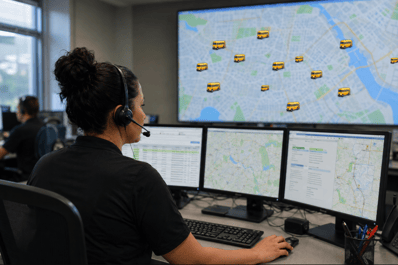 and a quick change on a shared spreadsheet. That process becomes difficult to control as the district adds buses, schools, special programs, drivers, and daily exceptions.
In 2026, real-time dispatch software scaling is not only about adding more vehicles to a database. It is about maintaining accurate information, fast decisions, and clear communication when hundreds of moving parts must work together.
A scalable dispatch platform should help transportation teams see what is happening, decide what to do next, and share those decisions with drivers, schools, and families.
Why dispatch becomes harder as fleets grow
Large districts deal with more than a higher number of buses. They also manage more route combinations, bell schedules, student assignments, driver absences, vehicle issues, and geographic coverage areas.
These factors create several pressure points
- Dispatchers may lose visibility when information is split across routing, GPS, ridership, and communication tools.
- A single driver absence can affect multiple routes and schools.
- Manual updates may reach some drivers but not others.
- Outdated student or address data can lead to incorrect assignments.
- More users can create confusion when the system does not support clear permissions and shared workflows.
These issues affect large fleet operations because each small delay can spread across the network. A change that takes five minutes to resolve for one bus may require much more coordination when several schools and routes are involved.
The operational challenges of real time dispatch
The first challenge is the speed of decision making. Dispatchers need current information about bus locations, route progress, driver status, and student assignments. A static route plan does not provide enough detail when a bus breaks down or traffic causes a major delay.
The second challenge is consistency. Every change must be reflected in the dispatcher view and communicated to the driver. If a driver receives an outdated instruction, the district may create a second problem while trying to solve the first.
The third challenge is accountability. Transportation leaders need a record of what changed, who approved it, and when the updated instructions were delivered. This information supports operational reviews and helps teams identify recurring issues.
DISPATCHpatrol is designed for this type of daily response. It allows dispatchers to submit driver absences and buses that are out of service, then reassign, combine, or split routes for that day without changing the permanent route plan.
The data foundation behind scalable dispatch
Strong dispatch system scalability depends on the quality and timing of the data entering the platform. More buses do not help if the system is working with outdated addresses, incomplete student records, or inconsistent vehicle information.
Before rollout, transportation leaders should review
- Student addresses and school assignments
- Driver and vehicle records
- Route and stop information
- Special transportation requirements
- Expected ridership
- User roles and access levels
- GPS and cellular connectivity
An integrated approach reduces repeated data entry. BusBoss LiveSYNC can move student additions, withdrawals, address changes, and routing information between BusBoss and supported student information systems. This helps reduce the data drift that can weaken dispatch decisions.
GPS data also needs to connect with route and student information. TRIPpatrol provides real time vehicle location information and can compare planned routes with actual travel. STUDENTpatrol adds visibility into ridership and student boarding activity.
Together, these connections give dispatchers a stronger view of what is planned, what is happening, and who may be affected.
What to evaluate before choosing a platform
Transportation directors should evaluate dispatch technology against real operating conditions rather than a simple feature checklist.
1. Performance under peak demand
Ask how the platform performs during morning and afternoon operations when many vehicles report location updates at the same time. Confirm whether the system can support your projected number of buses, routes, dispatchers, schools, and families.
2. Flexible route changes
A scalable platform should support temporary changes without damaging permanent route records. Look for tools that allow dispatchers to reassign drivers, remove vehicles from service, and combine or split routes.
3. Driver usability
A dispatch platform is only effective when drivers can receive and follow instructions quickly. The ROUTEpatrol Tablet App provides driver navigation, route updates, ridership collection, and inspection workflows through a tablet.
4. Shared visibility
Browser based access can help authorized staff work from the same information. ROUTEpatrol Web supports collaboration across transportation offices and allows multiple users to work on routing and scheduling tasks.
5. Parent and school communication
Families and school staff need reliable information when service changes. PARENTpatrol can provide live bus locations, estimated arrival times, transportation notifications, and student boarding updates.
The four step process for real time bus rerouting
When a disruption occurs, teams need a repeatable process. An integrated platform should support these four steps
- Detect the disruption instantly
Use GPS, driver status, vehicle information, and dispatcher reports to identify a delay, absence, breakdown, or route deviation. - Reassign and adjust using intelligent software
Review nearby vehicles, available drivers, route capacity, student needs, and school schedules. Then adjust the affected route without rebuilding the entire transportation plan. - Push instructions directly to driver tablets
Send the revised route and instructions to the driver through the ROUTEpatrol Tablet App. This reduces reliance on phone calls and printed updates. - Keep parents and schools informed
Share relevant updates through PARENTpatrol and established district communication workflows so families and schools know what to expect.
This process turns real-time logistics into a coordinated workflow instead of a series of disconnected reactions.
How an integrated platform improves control
Integrated fleet management software connects planning, dispatch, GPS tracking, ridership, driver tools, and communication. That connection gives transportation leaders a more complete operating picture.
It also improves fleet coordination by reducing the number of places where staff must enter or verify the same information. Dispatchers can focus on decisions instead of searching for updates across separate systems.
Leaders can also use historical data to identify repeated delays, underused vehicles, route deviations, and periods of high dispatcher workload. These insights support better staffing, route planning, and budget discussions.
A scalable system should grow with your district. It should support new schools, additional vehicles, changing transportation programs, and more users without forcing the department to replace its core workflows.
Summary and next steps
Successful real-time dispatch software scaling depends on more than technical capacity. Districts need accurate data, strong integrations, usable driver tools, clear rerouting workflows, and communication that reaches every affected group.
Evaluate how a platform performs during peak periods and real disruptions. Confirm that it can connect routing, GPS, ridership, driver tablets, and parent communication. Then test the workflow with a focused pilot before expanding across the fleet.
See how BusBoss supports connected dispatch and fleet coordination by scheduling a demonstration.

PRESIDENT
Sonia has been involved with BusBoss since the late 1990’s, and has personally overseen many projects for various customers ranging from large urban and suburban districts to smaller rural school districts from all over the country.

 (484) 941-0820