
bus route optimization, Dispatch Software, asset school bus tracking system, best gps device for school bus, driver navigation, easy gps tracker for school bus
Play blog summary Listen
School transportation directors need more than a map that shows moving buses. Strong student transportation safety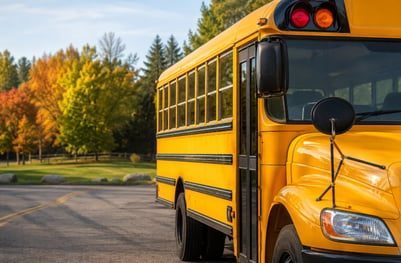 platforms connect route planning, student accountability, live vehicle visibility, dispatch, reporting, and family communication.
The best choice depends on your district’s size, fleet structure, state requirements, and existing systems. This guide compares the platform capabilities that matter most and explains how BusBoss brings them together in one transportation environment.
What to compare before choosing a platform
A useful evaluation should focus on daily operations rather than a long feature list. Ask each provider to demonstrate how its system handles these needs.
- Student accountability
Can the system record when students board and leave the bus? Can authorized staff quickly see which students are assigned to a vehicle during an emergency? - Route visibility
Does the platform show live bus locations alongside planned routes? Can staff review route history, deviations, delays, and unauthorized stops? - Compliance records
Can your team produce accurate ridership, route, incident, and operational reports? Confirm that the system supports your local requirements for school district compliance reporting. - Dispatch response
Can dispatchers adjust routes when a driver is absent, a bus is unavailable, or a road is closed? Updated instructions should reach drivers without relying on paper changes or phone calls. - Communication
Can schools and families receive accurate updates from the same information used by dispatchers? Separate data sources often create conflicting arrival times and unnecessary calls.
The National Transportation Safety Board school bus safety resources can also help districts define safety priorities before reviewing vendors.
What to compare before choosing a platform
A useful evaluation should focus on daily operations rather than a long feature list. Ask each provider to demonstrate how its system handles these needs.
- Student accountability
Can the system record when students board and leave the bus? Can authorized staff quickly see which students are assigned to a vehicle during an emergency? - Route visibility
Does the platform show live bus locations alongside planned routes? Can staff review route history, deviations, delays, and unauthorized stops? - Compliance records
Can your team produce accurate ridership, route, incident, and operational reports? Confirm that the system supports your local requirements for school district compliance reporting. - Dispatch response
Can dispatchers adjust routes when a driver is absent, a bus is unavailable, or a road is closed? Updated instructions should reach drivers without relying on paper changes or phone calls. - Communication
Can schools and families receive accurate updates from the same information used by dispatchers? Separate data sources often create conflicting arrival times and unnecessary calls.
The National Transportation Safety Board school bus safety resources can also help districts define safety priorities before reviewing vendors.
Best unified platform for district transportation
A unified platform is usually the strongest option for districts that want routing, tracking, ridership, dispatch, and reporting connected through one database.
ROUTEpatrol Web gives authorized staff a shared browser based workspace for routing and scheduling. Multiple users can work with current information instead of passing spreadsheets between offices. The system supports route planning by calendar date, student review, route optimization, and access to operational data.
This approach supports broader student transportation management because planning staff, dispatchers, administrators, and school personnel can work from connected information. It also helps districts evaluate capacity, ride times, route efficiency, and transportation costs.
Best platform for student tracking and ridership
GPS alone does not confirm which students are on a bus. Districts that need stronger accountability should look for student tracking connected to route and vehicle information.
STUDENTpatrol GPS Tracking supports ridership collection through RFID, NFC, or barcode readers. The system can record boarding and exiting activity and provide authorized personnel with current passenger information.
This can help staff answer important questions.
- Which students are currently on a bus
- Did a student board or exit at the expected location
- Which bus is carrying a student during an emergency
- How many riders are on a route
- Are actual ridership levels different from planned assignments
Accurate ridership records support transportation safety compliance and improve decision making. They can also reveal underused routes, changing demand, and recurring assignment problems.
Best platform for school bus tracking and route visibility
A platform should show more than a vehicle’s location. It should connect live movement to the planned route and provide a record that staff can review later.
TRIPpatrol GPS Tracking displays vehicle positions on detailed maps and allows districts to compare planned routes with actual routes traveled. Districts can monitor speed, route deviations, unauthorized stops, and vehicle activity over time.
This makes school bus tracking more useful for daily decisions. A dispatcher can see whether a bus is delayed, determine which students may be affected, and coordinate a response. Administrators can also review recurring delays and route behavior when evaluating safety and service quality.
Best platform for dispatch and live route changes
Unexpected events are part of school transportation. A bus may break down. A driver may call out. Severe weather or road construction may make a route unsafe.
DISPATCHpatrol is designed for live route changes and daily dispatch coordination. It allows dispatchers to submit driver absences, mark buses out of service, combine or split routes, and create updated route information without changing the permanent route plan.
A strong real time rerouting process should follow four steps.
- Detect the disruption instantly
Identify the breakdown, delay, absence, road closure, or safety concern through GPS data or dispatcher input. - Reassign and adjust using intelligent software
Review available buses, drivers, student assignments, capacity, and route restrictions before creating an alternative. - Push instructions directly to driver tablets
Send the updated route through the ROUTEpatrol Tablet App so the driver receives clear instructions. - Keep parents and schools informed
Use PARENTpatrol to provide families with current bus locations, estimated arrival times, and transportation notifications.
Best platform for parent communication
Families want reliable information when buses are delayed or routes change. PARENTpatrol provides live bus locations, estimated arrival times, stop information, and notifications when students are marked on or off the bus.
Communication works best when it is connected to the same routing and ridership data used by transportation staff. This reduces conflicting information and helps families prepare for changes without calling the transportation office for every update.
How to make the final decision
Use this process to compare platforms fairly.
- List your current safety, reporting, and communication gaps.
- Identify the systems that must connect, including your student information system.
- Test boarding records, route history, live tracking, and dispatch changes.
- Ask drivers and dispatchers to evaluate usability.
- Confirm data access, privacy controls, training, and support.
- Define measurable goals for ridership accuracy, response time, delays, and manual work.
A platform should support your district’s existing procedures while giving your team better control over daily operations. BusBoss connects routing with STUDENTpatrol, TRIPpatrol, DISPATCHpatrol, and PARENTpatrol.
Summary and next step
The best student transportation safety platforms connect four essentials. They verify students, show where buses are, help dispatchers respond to change, and create reliable records for district oversight.
For districts seeking an integrated approach, BusBoss provides tools for routing, school bus tracking, ridership, dispatch, parent communication, and reporting. The right system should make your team more prepared, not add another disconnected application to manage.
Schedule a BusBoss demonstration to review how the platform can support your district’s safety and compliance goals.

PRESIDENT
Sonia has been involved with BusBoss since the late 1990’s, and has personally overseen many projects for various customers ranging from large urban and suburban districts to smaller rural school districts from all over the country.
 (484) 941-0820