

bus route optimization, Dispatch Software, asset school bus tracking system, best gps device for school bus, driver navigation, easy gps tracker for school bus
Play blog summary Listen
Starting a new school bus routing software project brings high hopes. Transportation directors look forward to cutting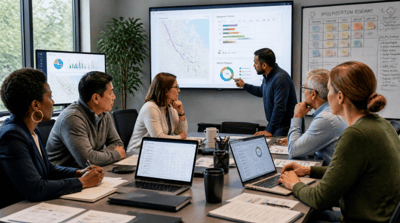 fuel costs and saving time. They want secure student ridership tracking and smooth daily dispatching. Yet many districts watch their new technology projects stall before reaching the finish line.
Projects slow down or stop completely when unexpected obstacles appear. Software rollouts fail due to messy data or lack of proper training. Understanding these roadblocks helps your district avoid costly delays. Modern solutions like BusBoss Professional give districts robust tools to succeed. Flexible deployment models like BusBoss SaaS also ensure smooth technical scaling.
Here are seven common reasons why school bus software rollouts stall and how your district can overcome them.
1. Poor Data Quality from the Student Information System
Data forms the foundation of any transportation system. If your student records contain errors then your routing software will generate flawed paths. Many rollouts stall right at the start because student addresses are outdated or misspelled.
Districts often feed messy database exports straight into new routing tools. When buses attempt to pick up students at incorrect coordinates planners lose faith in the software. Cleaning your student records before migration prevents massive headaches. Coordinate closely with your technology department to audit every address and bell schedule. Clean data ensures your automated routing engine calculates accurate paths and realistic ride times from day one.
2. Inadequate Staff Training and Complex User Interfaces
Introducing advanced technology requires proper user education. If dispatchers and route planners feel overwhelmed they will resist the new system. Many rollouts stall because vendors provide minimal training that leaves staff confused.
When employees do not understand core features they revert to old manual habits. Training should be ongoing and tailored to daily operational tasks. Staff members need hands on practice before the first day of school arrives. Empowering your team with thorough instruction builds confidence and ensures long term software adoption.
3. Underestimating GIS Mapping and Geocoding Challenges
Geographic information systems drive modern school bus routing. Accurate street networks and speed limits are vital for precise navigation. Rollouts frequently stall when map layers contain missing road segments or incorrect turn restrictions.
Rural districts face unique hurdles with nonstandard addresses or unmarked roads. Urban districts struggle with complex intersections and restricted traffic zones. Planners must verify GIS map layers early in the implementation cycle. Addressing mapping discrepancies proactively prevents buses from hitting dead ends or violating local traffic regulations during active routes.
4. Lack of Cross Departmental Buy In and Communication
Transportation departments do not operate in a vacuum. Successful software implementations require cooperation between transportation staff and school administrators. Projects often stall when key stakeholders feel excluded from the decision making process.
IT managers need to understand network requirements while finance teams review budget allocations. School principals must align bell schedules with realistic bus capacities. Clear communication keeps every department informed and invested in the success of the new routing platform. When leadership unites behind a single operational vision obstacles disappear much faster.
5. Skipping Parallel Testing and Pilot Programs
Jumping straight from legacy methods to a brand new system is risky. Many districts experience disastrous go live moments because they skipped testing phases. Software rollouts stall when planners refuse to run parallel tests alongside their old procedures.
A controlled pilot program lets your team test routes on a small subset of schools. Pilot testing reveals hidden errors in stop times and bus capacities before full deployment. Running tests early protects student safety and gives planners time to fine tune parameters without public pressure.
6. Neglecting Hardware Integration and Real Time GPS Feeds
Modern routing software relies on seamless hardware integration. GPS trackers and student ID scanners must communicate smoothly with your central database. Implementations often stall when hardware installations are delayed or misconfigured.
If GPS feeds drop out during morning runs dispatchers lose visibility over their fleet. Testing all vehicle hardware weeks before the school year starts prevents sudden technical failures. Reliable hardware connectivity ensures your routing software delivers accurate tracking information every single day.
7. Rigid Deployment Models That Lack Scalability
Technology infrastructure must match the unique capacity of your school district. Deploying rigid on premise servers can cause performance bottlenecks as data grows. Rollouts frequently stall when the chosen software cannot scale to meet changing district demands.
Cloud based infrastructure offers superior flexibility and automatic updates. Transitioning to modern cloud architectures allows your team to access routing tools from anywhere securely. Scalable systems adapt easily to district expansions or sudden shifts in student enrollment.
Summary and Next Steps
Stalled software rollouts cost districts time and money. Overcoming these seven hurdles requires careful planning and reliable technology partnerships. Clean data and thorough staff training form the bedrock of a successful transition. Phased testing and robust cloud infrastructure keep your transportation department moving forward safely.
Are you ready to streamline your district transportation planning without the usual rollout headaches? Explore our powerful routing solutions today. Visit our BusBoss Demo page to schedule a free personalized walkthrough with our routing experts.
Let us help your district achieve safe and efficient student transportation all year long.

PRESIDENT
Sonia has been involved with BusBoss since the late 1990’s, and has personally overseen many projects for various customers ranging from large urban and suburban districts to smaller rural school districts from all over the country.
 (484) 941-0820