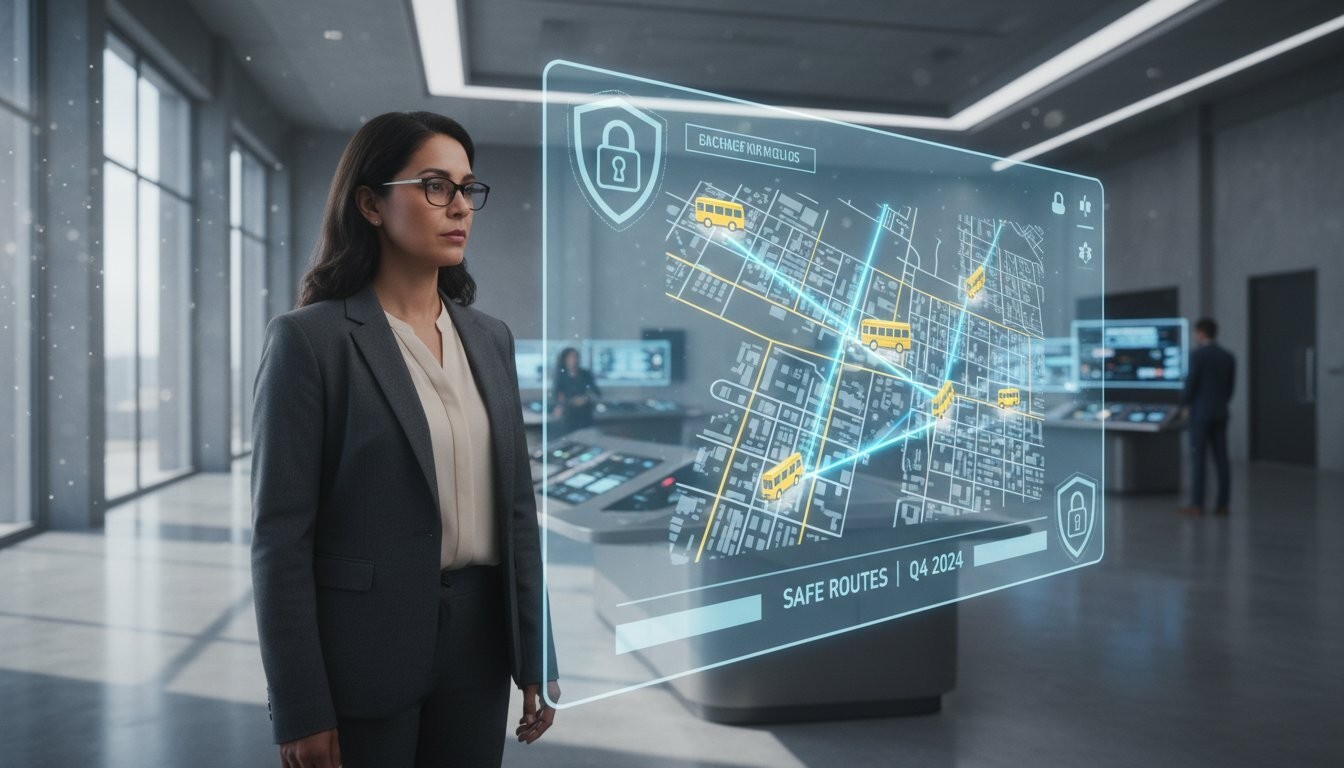
The thought of a FERPA violation can be daunting, with the risk of massive fines and damage to your district's reputation. For transportation departments, this concern is magnified. Every GPS ping, route manifest, and parent portal login handles sensitive student data. Is your current system truly secure, or is it an unintentional compliance risk waiting to happen? This uncertainty makes vetting vendors and justifying new technology a significant challenge for administrators and IT managers alike.
Navigating this complex landscape requires more than just efficient routing; it demands a deep commitment to data privacy. Choosing the right FERPA-compliant transportation software is a critical line of defense, ensuring the safety and confidentiality of your district's most precious cargo. In this 2026 guide, we will demystify what FERPA means for student transportation. You will discover the essential software features that protect student data, minimize legal risks, and give you the confidence to manage your routes with complete peace of mind.
When school districts consider data security, the focus is often on student information systems and classroom data. However, the school bus is a mobile extension of the educational environment, and the data it generates is equally protected. The Family Educational Rights and Privacy Act (FERPA) is a federal law that protects the privacy of student education records, and this protection extends far beyond the school building. Understanding how FERPA applies to transportation is the first step in mitigating significant financial and reputational risks associated with a data breach.
In transportation, an "education record" is any information directly related to a student that is maintained by the school district or a party acting on its behalf. This data is uniquely sensitive because it reveals a student's physical location and daily patterns, making its protection a critical safety and privacy imperative. Failure to secure this data can lead to severe penalties and, more importantly, a catastrophic loss of trust within the community. This is why districts must prioritize implementing FERPA-compliant transportation software to manage their operations with confidence.
On a school bus, PII is more than just a name on a list. It's a collection of highly sensitive data points that, if compromised, could directly endanger a student. This "education record" includes:
FERPA dictates that PII can only be accessed by school officials with a "legitimate educational interest." In transportation, this principle of need-to-know is paramount. Access should be strictly limited to personnel whose duties require it for the safe and efficient operation of the transportation system. This includes drivers needing to see their route manifest, dispatchers coordinating vehicle movements, and administrators overseeing the department. Conversely, individuals like parent volunteers or other students do not have a legitimate interest and cannot be granted broad access. Third-party software vendors are often designated as "school officials," making it vital that your FERPA-compliant transportation software provider understands and contractually agrees to this responsibility, building in robust role-based access controls to enforce your district's policies.
While understanding the law is the first step, identifying where your daily operations create legal vulnerabilities is critical. Transportation data, including student names, addresses, and schedules, is considered part of the student's protected educational record under the Family Educational Rights and Privacy Act (FERPA). Many districts unknowingly expose this sensitive information through outdated processes and unsecured technology, moving from theoretical compliance to real-world liability. These gaps often exist in three primary areas: staff communication, parent-facing technology, and vendor management.
The most immediate risks often arise from how your team communicates on the ground. When drivers and dispatchers rely on insecure methods to manage daily changes, they can inadvertently broadcast protected student information. This reliance on outdated, manual processes is a significant compliance failure waiting to happen.
In an effort to provide modern convenience, many districts adopt parent apps without proper security vetting. While well-intentioned, these tools can become a primary vector for a data breach if not implemented correctly. A single vulnerability can expose the data of every student in your transportation system, severely damaging parent trust. Key dangers include parent portals with weak identity verification, broadcasting bus locations publicly instead of to authorized guardians, and data breaches originating from poorly secured third-party app developers.
Your district's responsibility for protecting student data extends to every third-party vendor you work with. A lack of stringent oversight can lead to significant breaches and legal consequences. Choosing a truly FERPA-compliant transportation software means scrutinizing the vendor's security posture. Districts must demand clear data ownership policies, protocols for data destruction, and independent security certifications like SOC 2. Without these assurances, you are entrusting your students' precious cargo to a potential weak link in your security chain.
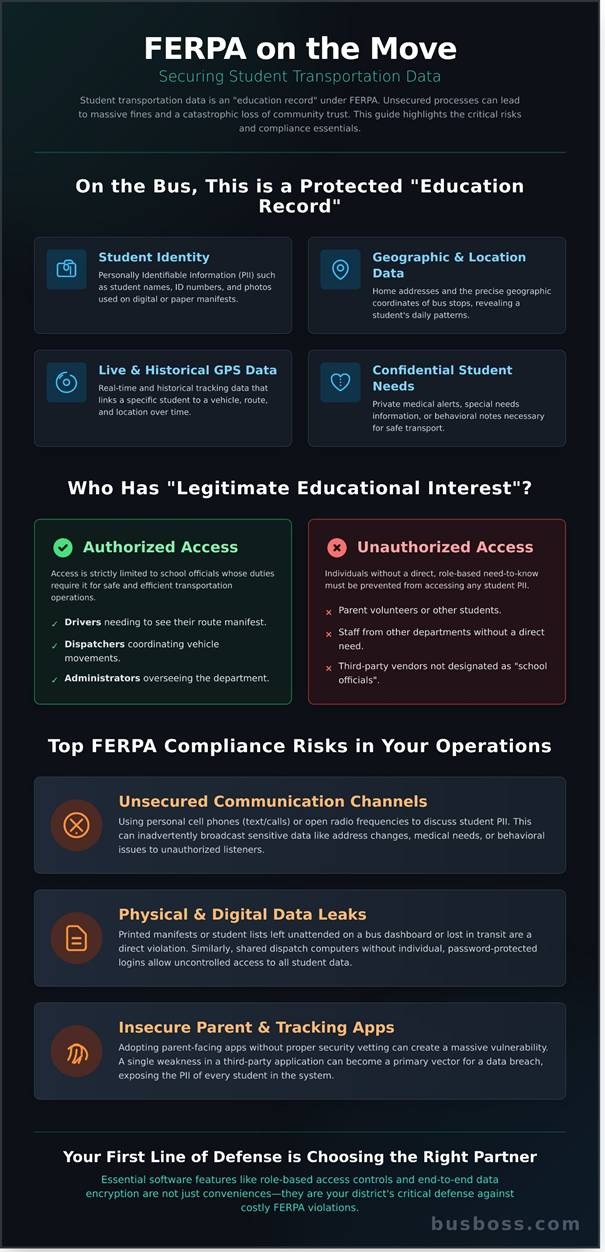
Understanding the legal framework is one thing; translating it into tangible security measures is another. A platform isn't compliant just because it says so-it must have the architecture to prove it. The best FERPA-compliant transportation software embeds data protection directly into its core functionality. These essential features are designed to mitigate risks proactively, ensuring that sensitive student information remains confidential and secure at every stage of the transportation process. They provide the necessary controls to manage who sees what, how data is protected, and how every action is tracked.
The principle of 'least privilege' is central to FERPA, meaning staff should only access the data required to perform their duties. A secure platform enforces this with granular controls that prevent accidental or malicious data exposure. This is the first line of defense in protecting your precious cargo's information.
Encryption is the ultimate safeguard for student data, rendering it unreadable to unauthorized parties even if a security breach occurs. This non-negotiable feature protects information both when it is being stored and when it is being shared. Data is encrypted 'at rest' on servers and in backups, and 'in transit' as it moves between the central server, dispatcher terminals, and driver mobile devices. This ensures that even if a tablet is lost or a network is compromised, the underlying student data remains confidential.
Using unsecure channels like personal text messages for routing updates or student issues creates significant compliance risks. A secure platform provides integrated tools that protect these interactions and create a clear record of accountability. This includes auditable, secure messaging between dispatch and drivers, and authenticated parent portals for sharing student-specific information. Most importantly, comprehensive audit logs track every instance of data access, modification, or sharing, creating an unbroken chain of custody essential for both security and compliance reporting.
Choosing a partner to manage your transportation data is a decision with significant security implications for your district. Protecting your students' personally identifiable information (PII) is paramount. A truly FERPA-compliant transportation software provider will not only claim compliance but will welcome a rigorous evaluation of their security posture. Use the following framework to ensure you are asking the right questions and partnering with a vendor who prioritizes the safety of your precious cargo.
During any product demonstration, move beyond routing features and challenge the vendor on their security infrastructure. A transparent partner will have ready and confident answers to these critical questions:
The sales pitch is a promise; the contract is a legally binding commitment. Your vendor agreement and any accompanying Data Processing Agreements (DPAs) must codify the security measures discussed. Scrutinize the fine print for:
A vendor’s hesitation to discuss security is the biggest red flag of all. This is not the place for vague assurances. Be wary of partners who exhibit the following warning signs:
Ultimately, a vendor's transparency is a direct reflection of their confidence and competence in data security. At BusBoss, we have built our systems and processes to exceed these standards because we believe protecting student data is a non-negotiable responsibility. We invite you to ask these tough questions and see why districts nationwide trust us as their FERPA compliant transportation software partner.
Understanding FERPA requirements is one thing; implementing them flawlessly is another. For over 25 years, BusBoss has been more than a software provider-we are a dedicated partner to school districts, committed to upholding the highest standards of data security and student safety. Our entire suite is engineered to provide transportation departments with the confidence and control needed to manage operations efficiently while protecting sensitive student information. We provide a robust, reliable, and FERPA-compliant transportation software solution built on a foundation of trust and experience.
Choosing BusBoss means choosing peace of mind. We translate complex compliance needs into practical, everyday tools that safeguard your data at every turn, because we believe your focus should be on the students, not on security vulnerabilities.
True data security isn't a feature; it's the framework. The BusBoss platform is built from the ground up to protect personally identifiable information (PII) and ensure access is strictly controlled. We manage the technical complexities so you can manage your routes with confidence.
Don't just take our word for it. See our security features in a live demo.
A comprehensive security strategy must extend beyond the transportation office. Our integrated mobile solutions are designed to share critical information without compromising on security, ensuring every user has access to only what they need, when they need it.
Every feature is purposefully designed to protect your district's data and, most importantly, your precious cargo.
As we move towards 2026, safeguarding student data within your transportation operations is no longer optional-it's a fundamental responsibility. The key to mitigating compliance risks lies in choosing a technology partner that understands the intricacies of student privacy laws. Selecting the right FERPA-compliant transportation software is a critical decision that directly impacts the safety of your students and the legal integrity of your district.
With over 25 years of experience, BusBoss is trusted by school districts across the United States to manage and protect their most sensitive information. We are dedicated to the safety of your 'precious cargo' and provide the robust tools you need to manage your routes with confidence. Don’t leave your district’s compliance to chance. See firsthand how a seasoned, reliable expert can fortify your operations.
Request a live demo to see how BusBoss protects your student data. Make the confident choice to secure your district's transportation for the years to come.
Yes, broadcasting a single bus's location to all parents on that route can create a FERPA violation. This action inadvertently shares directory information-a student's presence on a specific bus-without individual consent. A truly FERPA-compliant transportation software provides each parent with secure, individual access to only their child's transportation information. This ensures the location data of other students, your district's precious cargo, remains confidential and protected from unauthorized viewing.
Under FERPA, the school district is the legal custodian of student data and holds the ultimate responsibility for its protection. While a software vendor can be held contractually liable, the district cannot delegate its legal compliance obligations. This is why it is critical to partner with a trusted vendor that demonstrates a deep commitment to data security and has clear contractual terms outlining their responsibilities and liabilities in the event of a breach, ensuring your data management is secure.
FERPA governs the privacy of student education records, which includes transportation plans and health information maintained by the school. In contrast, HIPAA protects health information held by healthcare providers. For a student with special needs, their transportation requirements listed in an IEP are covered by FERPA. If a district employs a nurse who bills Medicaid, some data might fall under HIPAA, but for transportation management, FERPA is the primary regulation your district must confidently manage.
Effective training should be role-specific and ongoing. For drivers and aides, focus on practical scenarios: never discussing student routes or schedules in public, verifying the identity of adults at drop-off, and directing all parent inquiries to the transportation office. Training should cover what constitutes Personally Identifiable Information (PII) and establish a clear protocol for handling data. A robust training program is a cornerstone of managing compliance and protecting student safety from the office to the bus stop.
While technically possible, using software hosted outside the U.S. introduces significant compliance risks and is strongly discouraged. Foreign data privacy laws may not align with FERPA's strict requirements, and in the event of a data breach, legal jurisdiction becomes complex. To ensure maximum data security and clear legal accountability, school districts should prioritize vendors that host all student data on U.S.-based servers. This provides the highest level of confidence in your data management strategy.
Begin with a comprehensive data audit to identify how and where student transportation data is stored and shared. Next, review all vendor agreements to ensure they contain specific FERPA compliance clauses. The most critical step is to implement a dedicated FERPA-compliant transportation software solution that provides secure, role-based access to data. Finally, establish a regular training schedule for all staff involved in transportation to ensure policies are understood and consistently followed, streamlining your path to compliance.


 Orbit Software, Inc.
424 King Street
Pottstown, PA 19464
 (484) 941-0820