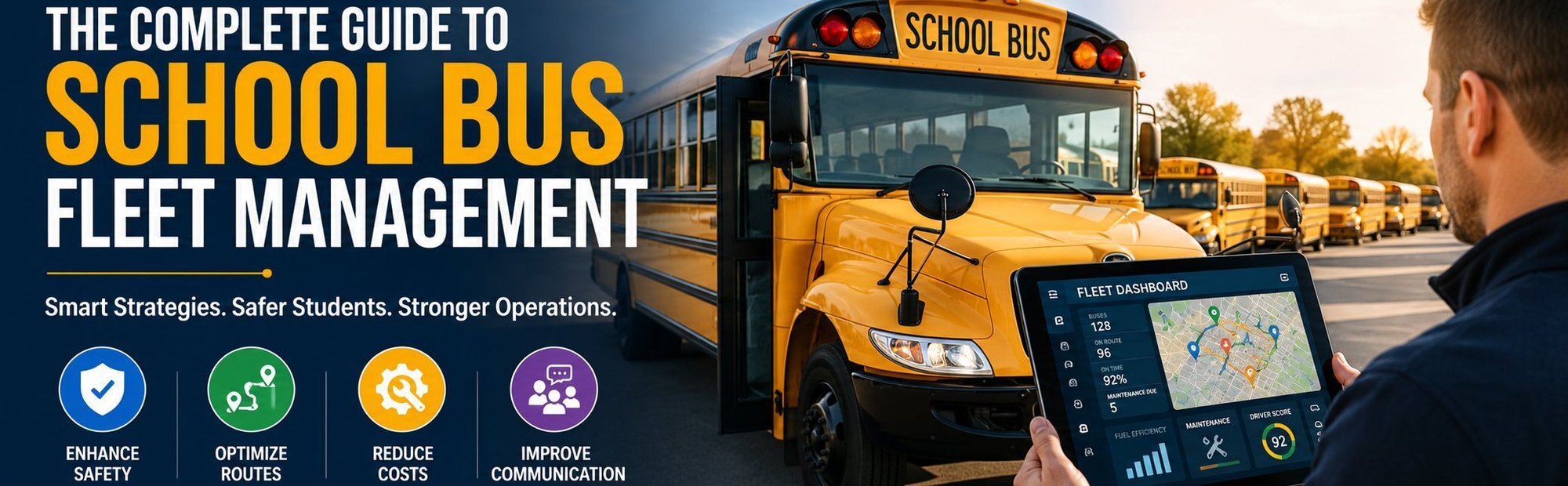
Juggling driver shortages, fielding calls from anxious parents, and watching fuel costs climb, for transportation coordinators, these aren't just minor headaches, they are daily hurdles in the high-stakes world of student transport. Effectively navigating these issues is the core of modern school bus fleet management. It’s a critical responsibility where every decision impacts operational budgets, parental confidence, and, most importantly, the safety of your precious cargo.
If you're ready to move beyond daily fire-fighting and into a position of confident, strategic control, this guide is for you. We will walk you through proven strategies to streamline operations, enhance safety protocols, and optimize routes for significant cost savings. You’ll gain the tools and insights needed to have a clear, real-time overview of your entire fleet, improve communication with drivers and parents, and ensure every student is transported safely and on time, every single day.
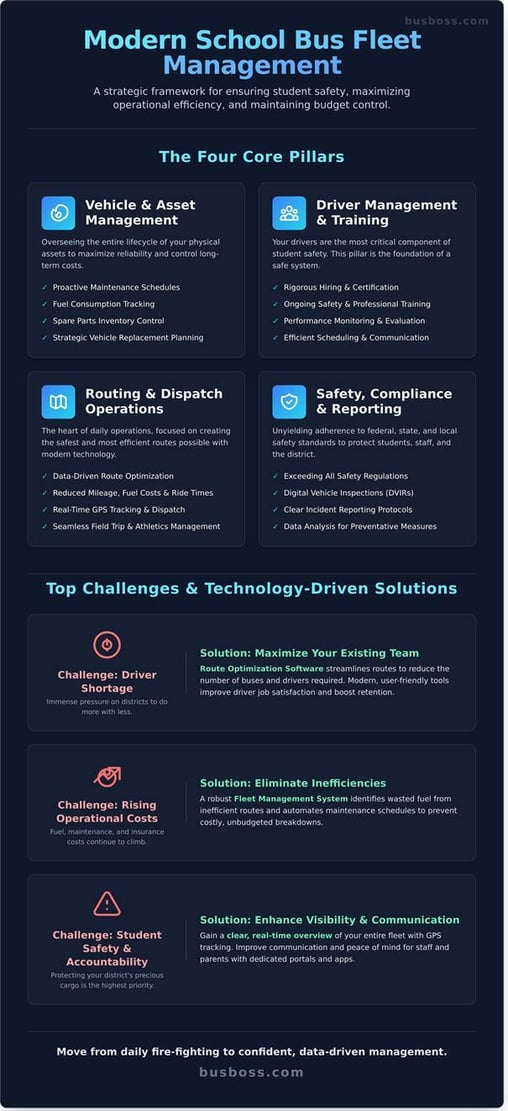
School bus fleet management is the comprehensive system used by school districts and transportation contractors to oversee and optimize their entire transportation network. It extends far beyond simply scheduling buses; it is a strategic discipline focused on achieving three primary goals: ensuring absolute student safety, maximizing operational efficiency, and maintaining strict budget control. This involves managing everything from daily dispatching to long-term vehicle acquisition, creating a framework that keeps your precious cargo safe and your operations running smoothly. A modern, effective program is built on four interconnected pillars.
This pillar covers the entire lifecycle of your physical assets. It begins with strategic vehicle acquisition and extends to creating and executing preventative maintenance schedules to minimize downtime and costly repairs. Effective asset management also involves meticulously tracking fuel consumption to identify inefficiencies, managing inventory for spare parts, and planning for vehicle replacement. The goal is to maximize the reliability and lifespan of every bus in the fleet while controlling long-term costs.
Your drivers are the most critical component of student safety. This pillar encompasses all aspects of personnel management, from rigorous hiring and certification processes to ongoing professional development and safety training. It includes performance monitoring through telematics and on-road evaluations, clear communication protocols for daily operations and emergencies, and efficient management of schedules and time tracking. Confident, well-trained drivers are the foundation of a safe transportation system.
At the heart of daily operations, this pillar focuses on creating the safest and most efficient routes possible. Modern transportation departments use data-driven software to optimize routes, reducing mileage, fuel costs, and student ride times. A core component of this is a sophisticated fleet management system, which enables real-time GPS tracking and dispatching. This technology allows coordinators to adapt instantly to traffic, breakdowns, or other exceptions and seamlessly manage special transportation for field trips and athletics.
Operating a school bus fleet requires unwavering adherence to a complex web of regulations. This pillar ensures that every aspect of your operation meets or exceeds federal, state, and local safety standards. Key functions include digitizing and enforcing mandatory pre- and post-trip vehicle inspections (DVIRs), establishing clear protocols for incident reporting and investigation, and using data analysis to identify safety trends and implement preventative measures. This commitment to compliance protects students, staff, and the district.
The role of a school transportation director has evolved far beyond simply scheduling buses. Today, it demands a sophisticated approach to logistics, safety, and communication. Effective school bus fleet management means navigating a complex web of challenges where a single oversight can impact student safety, strain budgets, and damage the district's reputation. While these hurdles are significant, they are not insurmountable. A systematic, technology-driven approach can transform these challenges into opportunities for greater efficiency and control.
The persistent shortage of qualified bus drivers puts immense pressure on districts to do more with less. Instead of constantly recruiting, leading departments are using technology to maximize their existing team. Route optimization software can streamline routes so effectively that it reduces the total number of buses and drivers required. Furthermore, providing drivers with modern, user-friendly tools, like digital pre-trip inspection forms and turn-by-turn directions, reduces daily frustrations, which directly improves job satisfaction and boosts driver retention.
Budgets are tighter than ever, yet the costs of fuel, vehicle maintenance, and insurance continue to climb. Every gallon of wasted fuel and every minute of unnecessary driver overtime directly impacts your bottom line. Inefficient routes are a primary source of this waste. A robust school bus fleet management system identifies and eliminates these inefficiencies. It also helps prevent the high, unbudgeted costs of unexpected breakdowns by tracking vehicle health and automating maintenance schedules, ensuring your fleet remains reliable and cost-effective.
Protecting your district's precious cargo is the highest priority. In today's world, this requires more than just a safe driver; it demands total visibility. You need to know which students are on which bus at any given time. Modern systems also allow you to monitor driver behavior, such as speeding or hard braking, to enforce safety policies that align with standards set by organizations like the National School Transportation Association. In an emergency, having accurate, real-time GPS location data for every vehicle is not a luxury-it is an absolute necessity.
Parents now expect instant access to information. The days of waiting by the curb with no updates are over. This new expectation creates a major challenge for transportation departments, which are often flooded with calls about bus locations, delays, and schedule changes. A unified platform that provides parents with a dedicated app for real-time bus tracking and sends instant, reliable alerts about delays eliminates this communication bottleneck. It frees up staff time, reduces parent anxiety, and builds trust in your department.
In modern school bus fleet management, guesswork and manual processes are liabilities. The era of reactive problem-solving-responding to a lost bus or a parent's call-is being replaced by proactive, data-driven management. At the core of this transformation is a powerful software platform that acts as a central command center, connecting every pillar of your transportation department. This technology creates a single source of truth, eliminating information silos and ensuring that every decision, from route adjustments to maintenance schedules, is based on accurate, real-time data. By harnessing this power, you can significantly enhance safety, streamline operations, and manage your fleet with confidence.
True operational control begins with knowing exactly where your assets are at all times. GPS tracking provides the foundational layer of visibility for your entire fleet. This is more than just a dot on a map; it's a constant stream of actionable data. You gain the ability to:
Building the most efficient routes by hand is a monumental task. Route optimization software uses sophisticated algorithms to do the heavy lifting, creating plans that prioritize the safety of your precious cargo while protecting your budget. These tools help ensure routes are not only efficient but also compliant with safety guidelines from authorities like the Federal Motor Carrier Safety Administration (FMCSA). The system intelligently reduces mileage, which directly translates to lower fuel consumption, decreased labor hours, and less wear and tear on your vehicles. Furthermore, it allows for simple 'what-if' scenario planning, making it easy to adapt to district boundary changes or new student enrollments.
An effective school bus fleet management system extends beyond the transportation office. Modern parent apps provide a secure, direct window into their child's daily journey, fostering trust and providing invaluable peace of mind. By giving parents real-time, password-protected access to their child's bus location, you empower them with information. Automated push notifications for unexpected delays or schedule changes drastically reduce the volume of inbound phone calls, freeing up your staff to focus on critical operational tasks. This direct line of communication reinforces your district's commitment to transparency and student safety.
In modern transportation, the "if it isn’t broke, don't fix it" mindset is a liability. A reactive approach to maintenance leads to unexpected breakdowns, costly emergency repairs, and unacceptable risks. Effective school bus fleet management demands a critical shift to proactive, preventive care. This strategy ensures your buses are not just running, but are fundamentally safer, more reliable, and always ready for inspection, because your precious cargo deserves nothing less.
Preventive Maintenance (PM) is a schedule-based strategy where service is performed based on preset triggers like mileage, engine hours, or time intervals. Instead of waiting for a failure, you address potential issues before they escalate. This includes routine tasks essential for safety and performance:
Modern fleet management software automates this entire process, sending alerts when a vehicle is due for service and creating work orders automatically, ensuring no critical task is ever overlooked.
Paper-based pre- and post-trip inspections are inefficient and create a critical delay between a driver identifying a problem and the maintenance team being notified. Digital Vehicle Inspection Reports (DVIRs) streamline this entire workflow. Drivers use a tablet or mobile device to complete checklists quickly and accurately. If a driver flags a failed item, such as a faulty brake light or low tire pressure, the system can instantly trigger a maintenance work order, ensuring issues are addressed before the next route.
A detailed, accessible service history for every vehicle in your fleet is indispensable. This digital logbook provides mechanics with crucial diagnostic information and serves as a complete record for compliance audits. By tracking parts, labor, and downtime, you can calculate the true cost-per-mile for each bus. This data-driven approach helps you identify unreliable "problem" vehicles that drain your budget and allows you to make informed, financially sound decisions about vehicle replacement. It is a cornerstone of strategic and cost-effective school bus fleet management.
Selecting the right school bus fleet management software is a critical decision that impacts student safety, operational efficiency, and your district's budget. The best platform is not just a collection of features; it's a comprehensive solution supported by a true technology partner. Before evaluating vendors, take the time to define your district’s unique needs. Document your current challenges, from complex bell schedules and special needs transportation to communication gaps with parents. This internal audit will empower you to choose a system that solves today's problems and scales for tomorrow's growth.
A modern solution must provide a complete, real-time view of your operations. As you evaluate options, ensure they offer a robust suite of core modules that work together seamlessly. Your checklist should include:
The technology is only one part of the equation. Your vendor should be a long-term partner invested in your success. During demos, go beyond feature discussions and ask critical questions about their support and implementation process:
Managing multiple, disjointed tools for routing, GPS, and maintenance creates data silos, increases administrative workload, and leads to confusion. An all-in-one platform eliminates these headaches by ensuring data flows seamlessly between modules. A route change is instantly reflected in the GPS system and the parent app. A diagnostic alert from a bus automatically informs the maintenance schedule. This level of integration not only streamlines operations but also enhances the safety of your precious cargo. With one trusted partner, you have a single point of contact for support, ensuring accountability and faster problem resolution. See how BusBoss provides a truly integrated platform.
Navigating the complexities of modern school transportation requires more than just managing routes; it demands a comprehensive strategy focused on safety, efficiency, and proactive problem-solving. As we've explored, overcoming today's challenges means shifting from reactive fixes to a forward-thinking maintenance program and embracing technology as your central command center. An effective school bus fleet management system is the cornerstone of this transformation, ensuring the well-being of your precious cargo on every journey.
Choosing the right technology partner is critical. With over 25+ years of dedicated experience, BusBoss has become the trusted solution for hundreds of school districts nationwide. We provide a complete, integrated platform that unifies routing, GPS tracking, and parent communication, giving you the tools to manage your fleet with absolute confidence and unparalleled efficiency.
Are you ready to optimize your operations and prioritize student safety? Request a Live Demo to see how BusBoss can transform your fleet management.
Take control of your fleet and build a more reliable, cost-effective transportation system for your community. The path to streamlined operations and enhanced safety starts today.
While related, they serve distinct functions. Routing software is a specialized tool focused on planning the most efficient and safest paths for your buses to travel. It optimizes for factors like time, distance, and student stop locations. A comprehensive fleet management system is a broader platform that often includes routing but also adds real-time GPS tracking, vehicle diagnostics, maintenance scheduling, driver behavior monitoring, and detailed reporting. It manages the fleet's daily operations, not just the plan.
Our software enhances safety by providing complete operational visibility. Real-time GPS tracking allows you to monitor bus speeds and locations, ensuring drivers adhere to their approved routes. Features like student ridership tracking confirm each child gets on and off at the correct stop, preventing a child from being left behind. Furthermore, driver behavior alerts for harsh braking or rapid acceleration help you address unsafe driving habits, protecting the precious cargo on board at all times.
Absolutely. The system is designed to streamline compliance and reporting. It automates the tracking of essential data for state transportation reports, including mileage, student counts, and bell times. You can easily manage driver qualifications, track Hours of Service (HOS), and maintain digital vehicle inspection records (DVIRs) to ensure you are always prepared for an audit. This simplifies record-keeping, minimizes errors, and keeps your district in good standing with all regulatory bodies.
The ROI for a school bus fleet management system is typically realized within 12-24 months through significant cost savings. Districts often see a 5-15% reduction in fuel costs from optimized routing alone. Additional savings come from decreased vehicle wear and tear due to proactive maintenance scheduling and reduced administrative overhead from automated reporting. By streamlining operations, you not only save money but also reallocate staff time to more critical safety and service tasks.
We make the transition as seamless as possible with a structured implementation process. Our dedicated team handles the heavy lifting, including data conversion from your existing systems and initial software setup. We then provide comprehensive, role-based training through our SuccessRoute Training program to ensure your transportation coordinators, dispatchers, and drivers are confident using the new tools. Our goal is to have your district operating with greater efficiency and confidence from day one.
Yes, seamless SIS integration is a core feature of the BusBoss platform. Our system is designed to connect with all major Student Information Systems, creating a secure, two-way data sync. This eliminates redundant data entry, reduces the risk of human error, and ensures your routing and ridership information is always based on the most up-to-date student records. This integration is a critical component of modern, efficient school bus fleet management that saves your staff valuable time.


 Orbit Software, Inc.
424 King Street
Pottstown, PA 19464
 (484) 941-0820