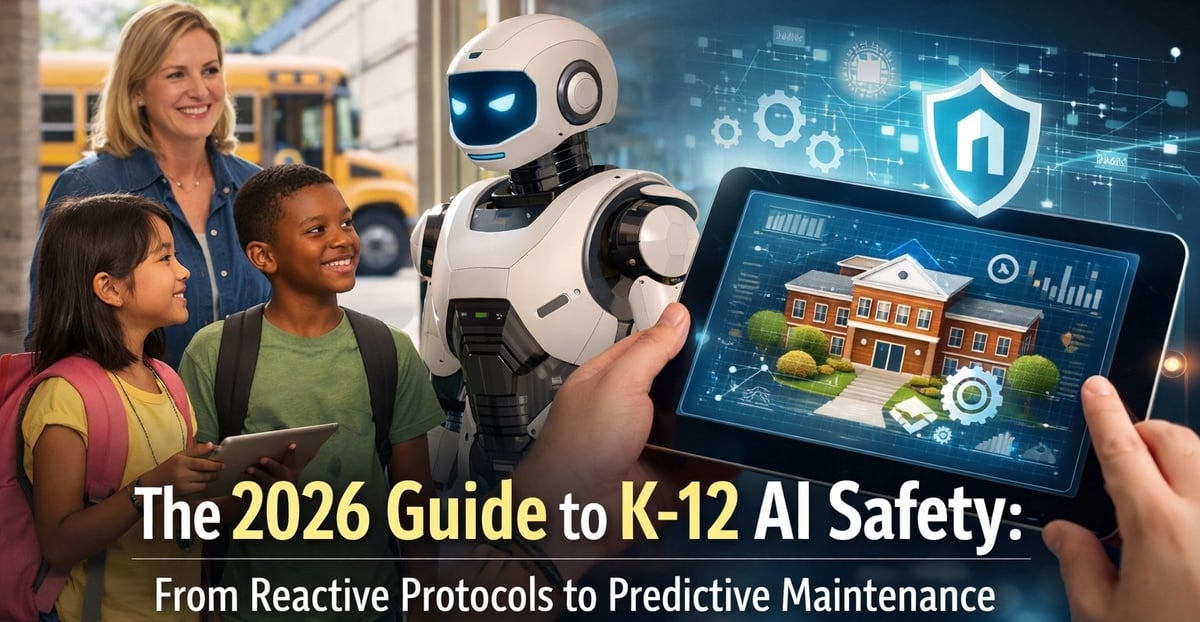
Let's be honest: if you're still waiting for a bus to break down before you fix it, you're playing a dangerous (and expensive) game of roulette with student safety. Welcome to 2026, where the smartest transportation directors have ditched the "wait and see" approach for something far more powerful: predictive AI safety systems.
Gone are the days when school bus safety meant reacting to incidents after they happened. Today's K-12 transportation landscape is all about staying three steps ahead: predicting maintenance issues before they become breakdowns, identifying safety concerns before they become emergencies, and using real-time data to make decisions that keep every single student safe.
If you've been wondering whether AI in student transportation is just another buzzword or an actual game-changer, buckle up. We're about to take a deep dive into how artificial intelligence is revolutionizing school bus safety in ways that would have seemed like science fiction just five years ago.
Remember when "preventive maintenance" meant changing oil every 5,000 miles and hoping for the best? Those days are officially over.
In 2026, we're witnessing a fundamental shift in how districts approach school bus safety. Instead of responding to problems, transportation directors are now preventing them entirely. The difference? Artificial intelligence that can analyze thousands of data points in real-time and tell you exactly what's about to go wrong: before it does.
Here's what the old reactive model looked like:
The new predictive model flips this entirely:
The data doesn't lie. Districts using AI-driven predictive maintenance are seeing breakdown rates drop by 40-60%, maintenance costs decrease by 30%, and: most importantly: zero safety incidents related to mechanical failure.
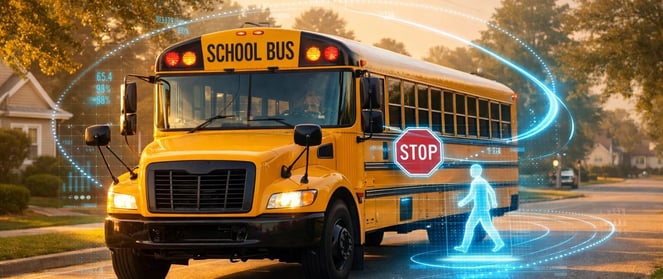
Let's talk about what's happening inside your buses right now. If you're not using AI-powered safety technology, you're essentially flying blind. But if you are? You've got a 360-degree safety net that never sleeps, never blinks, and never misses a detail.
Traditional dashcams record footage that you watch after something goes wrong. AI dashcams? They're actively monitoring driver behavior in real-time and intervening before incidents happen.
These aren't your grandfather's security cameras. Modern AI dashcams in 2026 are:
- Constantly analyzing driver behavior – Detecting distracted driving, phone use, drowsiness, or failing to check mirrors. When risky behavior is detected, the system can provide immediate audio alerts to the driver.One California district reported that after implementing AI dashcams across their fleet, they saw a 73% reduction in harsh braking incidents and a 58% decrease in speeding violations: all within the first six months. But more importantly? They had zero preventable accidents that entire school year.
AI safety technology isn't just watching your drivers: it's watching everything. Computer vision systems can now:
The system doesn't just record: it alerts. If something dangerous is happening, dispatchers and administrators know immediately, not when they review footage at the end of the week.
Now, I know what you're thinking: "This sounds like Big Brother on wheels." And you're right to think carefully about privacy. The good news? Modern AI systems are built with privacy protections baked in.
Quality systems like those integrated with BusBoss's comprehensive platform blur faces in routine recordings, only flagging genuine safety concerns. They focus on behavior patterns, not individual surveillance. And they give transportation directors the control to set parameters that match their district's values and policies.
The key is transparency. When drivers, parents, and students understand that these systems exist to protect everyone: not to punish: adoption becomes much smoother.
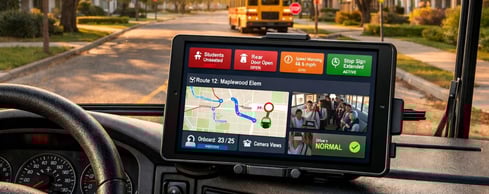
This is where things get really interesting. Predictive maintenance isn't just about convenience: it's about fundamentally changing how you manage your fleet.
Every modern school bus can be equipped with dozens of IoT (Internet of Things) sensors that monitor critical systems continuously:
- Engine Health Sensors – Tracking temperature, oil pressure, fuel efficiency, and combustion patterns. When these metrics start drifting from normal ranges, the AI knows a problem is developing: often weeks before a human mechanic would notice symptoms.
Let me paint you a picture. A mid-sized district in Texas was spending over $450,000 annually on emergency repairs and breakdown-related costs. After implementing predictive maintenance through their transportation management system, here's what happened:
Year 1:
Year 2:
The district saved over $180,000 in direct costs, but the real win? Not a single student was stranded due to a mechanical failure that entire year. Parents noticed. Board members noticed. And the transportation director became a hero instead of a firefighter.
Here's the beautiful part: you don't need to rip out your entire operation to implement predictive maintenance. Systems like BusBoss Professional are designed to layer AI predictive capabilities onto your existing fleet management workflow.
Your mechanics don't need computer science degrees. The AI translates complex sensor data into simple work orders: "Bus 47 needs transmission service within the next two weeks" or "Bus 12's brake pads will reach minimum thickness in approximately 3,200 miles."
Your maintenance schedule becomes optimized automatically. Instead of arbitrary calendar-based servicing, you're maintaining each bus exactly when it needs attention: no sooner (wasting money) and definitely not later (risking breakdowns).
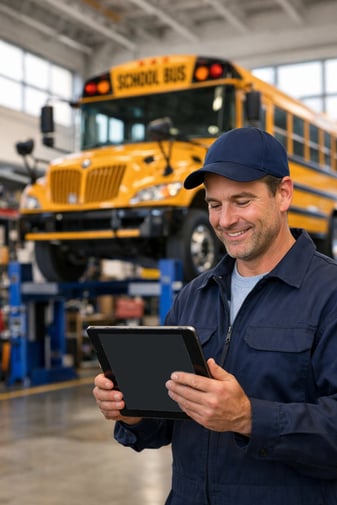
Let's clear something up right away: AI routing isn't just about getting students to school faster. It's about getting them there safer.
AI-powered routing systems like those in BusBoss Enterprise don't just calculate the shortest path. They consider:
- Historical accident data – The system analyzes years of traffic incidents and identifies intersections, road segments, and times of day where accidents cluster. Routes are designed to avoid these danger zones whenever possible.
- Traffic patterns and congestion – Heavy traffic isn't just slow: it's statistically more dangerous. AI routing finds the sweet spot between directness and safety, avoiding rush-hour chaos that increases accident risk.
- Weather and road conditions – In real-time, the system can adjust routes based on current conditions. That back road that's perfect in summer? The AI knows it becomes a skating rink in January and routes around it.
- Construction and temporary hazards – The system integrates with live traffic data to identify and avoid construction zones, road closures, and temporary hazards that haven't made it onto static maps yet.
- Stop arm violation hotspots – Some intersections have higher rates of drivers illegally passing stopped buses. The AI identifies these and, when possible, adjusts stop locations to safer alternatives.
Here's where it gets wild. In 2026, routes aren't static things you set in August and forget about. They're dynamic, living plans that adjust constantly based on real-world conditions.
The ROUTEpatrol Tablet App can provide drivers with live updates from dispatching:
Your dispatchers see everything through DISTRICTpatrol, the command center that gives you a god's-eye view of your entire fleet. When something changes, you're not scrambling to make radio calls: the system handles it automatically while keeping everyone informed.
For students with special needs, safety isn't just important: it's absolutely critical. AI routing takes into account:
BusBoss has been perfecting special education routing for over 25 years, and the AI enhancements in 2026 represent the culmination of decades of real-world experience translated into algorithmic intelligence.
Information saves lives. But only if the right information reaches the right people at the right time. That's where real-time data systems become absolute game-changers for school bus safety.
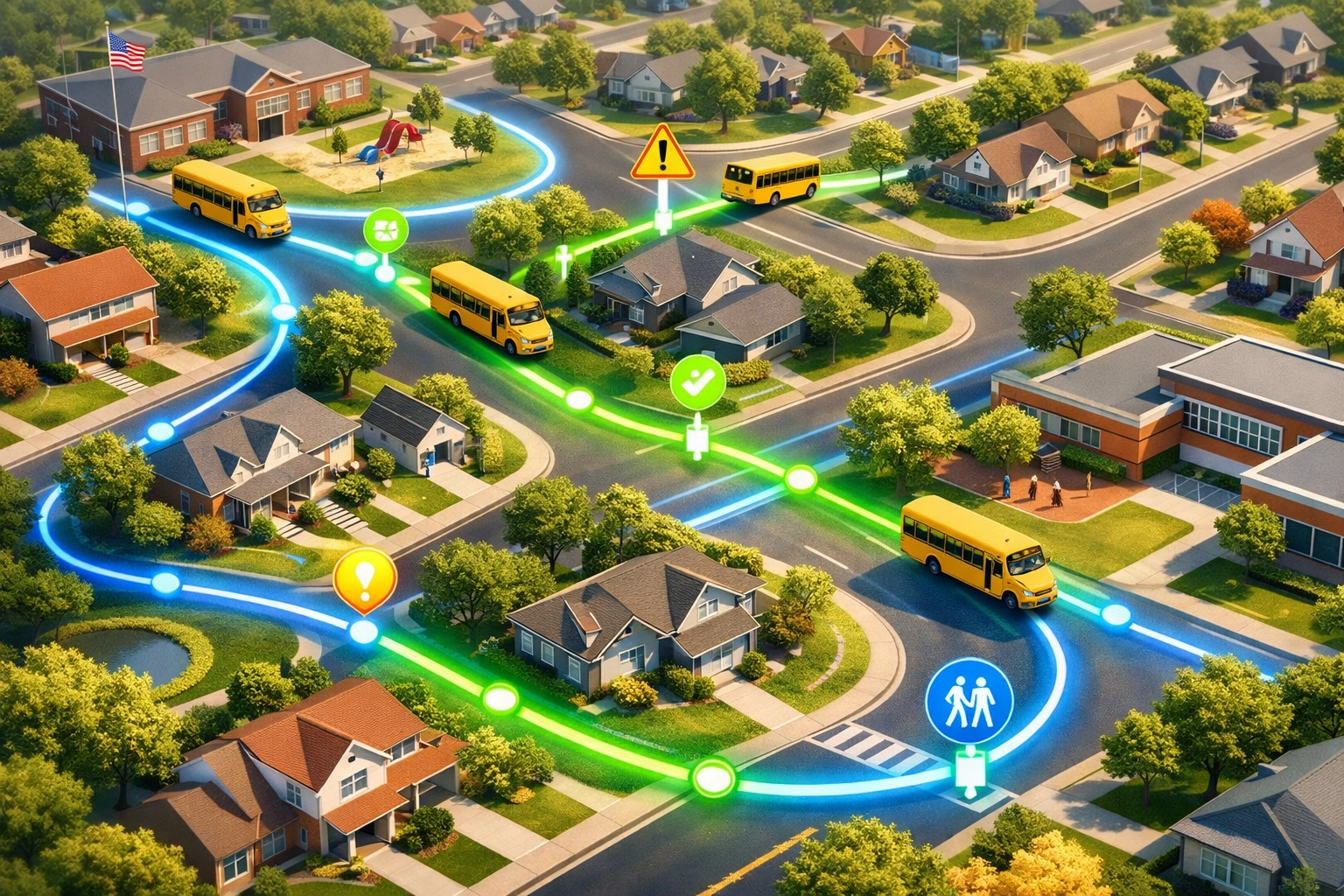
Imagine being able to see every single bus in your district, in real-time, with complete transparency into what's happening on each one. That's not future tech: that's DISTRICTpatrol today.
Transportation directors using this system can:
- Monitor live locations – Every bus, every moment. No more wondering where Bus 23 is or whether Bus 45 picked up those special needs student on Pine Street.
- Receive instant safety alerts – The AI doesn't wait for you to notice problems. Hard braking, speeding, route deviations, unexpected stops: you're notified immediately so you can respond appropriately.
- Track driver performance metrics – Not for punitive reasons, but to identify who needs support, coaching, or recognition for excellent safety practices.
- Manage incidents in real-time – When something does happen, you have complete data at your fingertips for immediate response and later analysis.
- Analyze historical patterns – The system learns over time, helping you identify recurring safety issues, optimize routes based on actual performance data, and make evidence-based decisions about fleet management.
One transportation director told us: "Before DISTRICTpatrol, I felt like I was managing blind. Now I feel like I have X-ray vision. I can spot problems before they become emergencies, and when emergencies do happen, I have every piece of information I need to handle them perfectly."
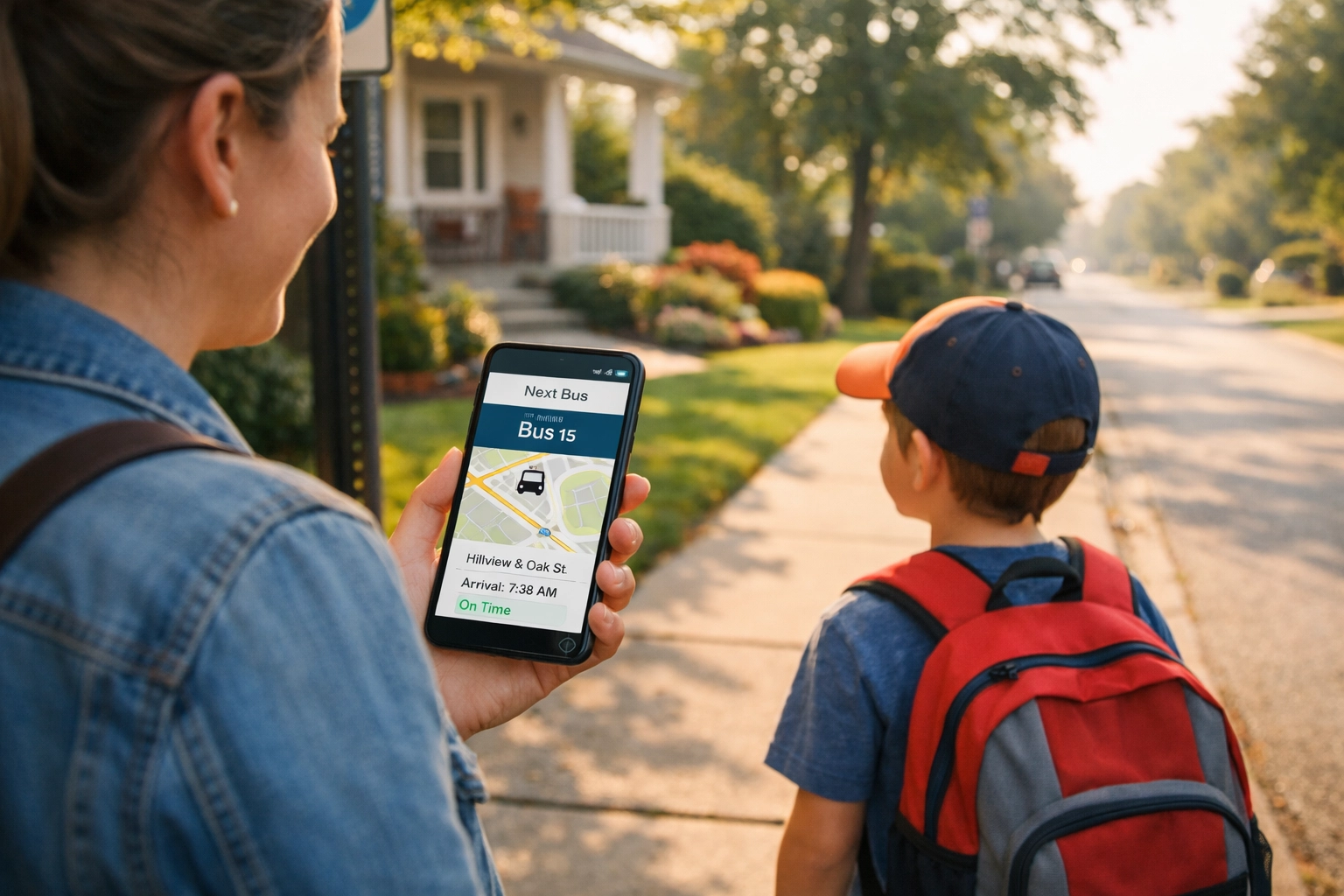
Here's an underrated safety feature: informed parents. When parents know exactly where their child's bus is, estimated arrival times, and any delays or changes, several things happen:
- Reduced student wait time – Parents aren't sending kids to the stop 15 minutes early "just in case." They're sending them exactly when needed, reducing unsupervised street-corner time.
- Faster emergency response – When a bus is delayed, parents know immediately. No panicked calls to the school. No kids standing in bad weather longer than necessary.
- Increased trust and transparency – Parents who can track their child's bus in real-time have measurably higher satisfaction with their district's transportation service. That trust translates into community support when you need it.
- Better safety habit formation – When parents can see exactly when the bus is approaching, they can ensure their child is ready and watching: reducing those last-minute dashes into traffic.
PARENTpatrol isn't just convenient: it's a safety multiplier that engages families as partners in student transportation safety.
The magic happens when all these systems talk to each other:
This entire sequence happens in minutes, not hours or days. And most importantly, students are never put at risk because a "minor" brake issue became a catastrophic failure mid-route.
Let's talk money, because I know that's what your superintendent and school board want to hear about. AI safety systems represent a significant investment. But here's the thing: they pay for themselves faster than almost any other technology investment you can make.
- Reduced maintenance costs – As we discussed, predictive maintenance can cut your annual maintenance budget by 25-35%. For a mid-sized district, that's $100,000-$200,000 per year.
- Fewer emergency repairs – Emergency mechanic rates are typically 150-200% of standard rates. When you eliminate 50-70% of emergency calls, those savings add up fast.
- Lower insurance premiums – Many insurers now offer substantial discounts (10-25%) for districts using comprehensive AI safety systems. The data shows these fleets have fewer accidents, and insurers reward that.
- Improved fuel efficiency – AI route optimization typically improves fuel efficiency by 8-15% through better routing and reduced idling. That's real money every single day.
- Extended vehicle lifespan – Buses that receive predictive maintenance last longer: often 2-3 years longer than buses on reactive maintenance schedules. The capital expense savings are enormous.
- Reduced staff turnover – Drivers who feel safe and supported stay longer. The cost of recruiting, training, and onboarding new drivers is often $5,000-$8,000 per driver. Retention is profitability.
- Fewer incident investigations – When AI systems capture complete data around incidents, investigation time drops dramatically. Your transportation director isn't spending 10 hours piecing together what happened: the system shows them immediately.
- Decreased liability – Comprehensive safety systems that document everything create powerful protection against litigation. Districts with strong safety data win cases and settle faster and cheaper when they do face claims.
- Staff productivity gains – When mechanics aren't constantly firefighting, when dispatchers aren't managing crisis after crisis, and when administrators aren't buried in incident reports, productivity soars.
Some things don't fit on spreadsheets:
One transportation director put it perfectly: "I used to lie awake at night worrying about what might go wrong. Now I sleep well knowing that if anything does go wrong, we'll catch it early, handle it professionally, and learn from it. That peace of mind? I can't put a dollar figure on it, but it's worth every penny we invested."
Let's look at actual numbers from a 65-bus district that implemented comprehensive AI safety systems:
Initial Investment:
Year 1 Returns:
Payback period: 12.8 months
But here's what really sold the board: In the three years before implementation, the district had 11 preventable accidents, 4 student injuries, and 2 major lawsuits. In the two years after? Zero preventable accidents, zero student injuries, zero lawsuits.
When you prevent even one serious incident, the entire system has paid for itself several times over.
So, you're sold on the concept. Now what? Here's your roadmap to implementing AI safety systems in your district without disrupting operations or overwhelming your team.
Start by understanding where you are and where the biggest opportunities lie:
Audit your current systems – What technology are you already using? What data are you already collecting? You might be surprised at what you already have that can integrate with AI platforms.
Identify pain points – Survey your drivers, mechanics, dispatchers, and parents. Where are the frustrations? What keeps your transportation director up at night? These pain points become your implementation priorities.
Benchmark your metrics – Establish baseline measurements for breakdown rates, maintenance costs, accident frequency, parent satisfaction, and on-time performance. You can't prove ROI if you don't know your starting point.
Don't try to transform your entire operation overnight. Start small and prove the concept:
Select 10-15 buses for initial deployment – Choose a mix of high-mileage buses, problematic routes, and special needs transportation to test across different scenarios.
Train a core team – Get your lead mechanic, best dispatcher, and most tech-savvy drivers involved early. They'll become your internal champions.
Collect feedback religiously – Weekly check-ins with all stakeholders. What's working? What's confusing? What needs adjustment?
Measure everything – Document every win, no matter how small. "Bus 23 scheduled for preventive transmission service based on AI alert: potential $8,000 emergency repair avoided." These stories sell the program to skeptics.
Once your pilot proves the value, roll it out fleet-wide:
Staged implementation – Don't try to do everything in one week. Roll out systems methodically: dashcams first, then predictive maintenance sensors, then advanced routing features.
Comprehensive training – Everyone who touches the system needs proper training. BusBoss provides extensive training resources, including on-site support, video tutorials, and ongoing coaching.
Communication strategy – Keep drivers, parents, and the broader community informed about new safety investments. This is a positive story: tell it well.
AI systems get smarter over time. Your Year 2 results will be better than Year 1:
Regular system reviews – Quarterly meetings to analyze data, identify trends, and adjust configurations.
Continuous training – As systems evolve and new features roll out, keep your team current.
Share successes – Present results to your school board. Let your community know that student safety is improving measurably.

Look, I'll be straight with you: implementing AI safety systems isn't optional anymore. It's where the entire industry is headed, and districts that wait too long will find themselves playing catch-up while others are already reaping the benefits of safer, more efficient operations.
But here's the good news: you don't have to figure this out alone.
BusBoss has been the trusted name in K-12 transportation management for over 25 years. We've seen every challenge districts face, and we've built our systems specifically to address those real-world problems. We're not a tech company trying to sell you generic fleet management software. We're a K-12 transportation company that happens to leverage cutting-edge technology.
- Purpose-built for K-12 – Every feature, every algorithm, every workflow is designed specifically for school transportation. We understand IEP requirements, McKinney-Vento compliance, special needs routing, Medicaid reimbursement tracking, and all the unique challenges you face.
- Comprehensive integration – BusBoss Professional and BusBoss Enterprise aren't just routing tools. They're complete transportation management platforms that integrate predictive maintenance, real-time tracking, parent communication, driver management, and financial reporting into one cohesive system.
- Proven at scale – We power transportation for some of the largest districts in North America, but we also provide the same enterprise-level capabilities to small rural districts. Our systems scale to your needs.
- Exceptional support – When you call BusBoss, you talk to people who understand school transportation. Our support team has the expertise to help you solve problems quickly, and our implementation specialists ensure smooth rollouts.
- Continuous innovation – We're constantly evolving our platform based on customer feedback and emerging technology. When new AI capabilities become available, you're not stuck with yesterday's system: you're getting tomorrow's features.
Ready to explore what AI safety systems can do for your district? Here's what happens next:
Schedule a consultation – No sales pressure, just a genuine conversation about your challenges and goals. Visit busboss.com to learn more.
Get a personalized assessment – We'll analyze your current operations and show you specific areas where AI can make the biggest impact.
See the system in action – A live demonstration of BusBoss Professional or Enterprise, tailored to your district's specific needs and pain points.
Develop your roadmap – We'll work with you to create a realistic implementation plan that fits your budget and timeline.
We've covered a lot of ground here: AI dashcams, predictive maintenance, intelligent routing, real-time communications, and measurable ROI. But let's bring it back to what really matters.
Every single day, you're responsible for getting thousands of students safely to school and home again. That's a huge responsibility, and in 2026, you have tools available that make that job dramatically easier and more effective than ever before.
The shift from reactive protocols to predictive maintenance isn't just a technological upgrade: it's a fundamental reimagining of how we approach student safety. Instead of responding to problems, we prevent them. Instead of hoping everything goes smoothly, we know it will because we're monitoring, predicting, and optimizing constantly.
The districts that embrace AI safety technology now will be the leaders in their communities: the ones with the best safety records, the most satisfied parents, the most loyal drivers, and the most confident board members.
The districts that wait? They'll get there eventually. But in the meantime, they'll be spending more money, dealing with more crises, and accepting more risk than they need to.
You've got a choice to make. Continue operating the way you always have, putting out fires and hoping for the best. Or step into the future of K-12 transportation, where AI works alongside your team to create the safest possible environment for every student, every route, every single day.
Which district do you want to be?
Ready to transform your district's approach to student safety? Explore how BusBoss can help you implement AI-driven safety systems that protect students, save money, and give you peace of mind. Visit our extensive FAQ or learn more about GPS student tracking to see what's possible when you partner with the industry's most trusted name in K-12 transportation management.
BusBoss – Reliable school transportation management software with over 25 years of experience helping districts keep students safe.
 Orbit Software, Inc.
424 King Street
Pottstown, PA 19464
 (484) 941-0820