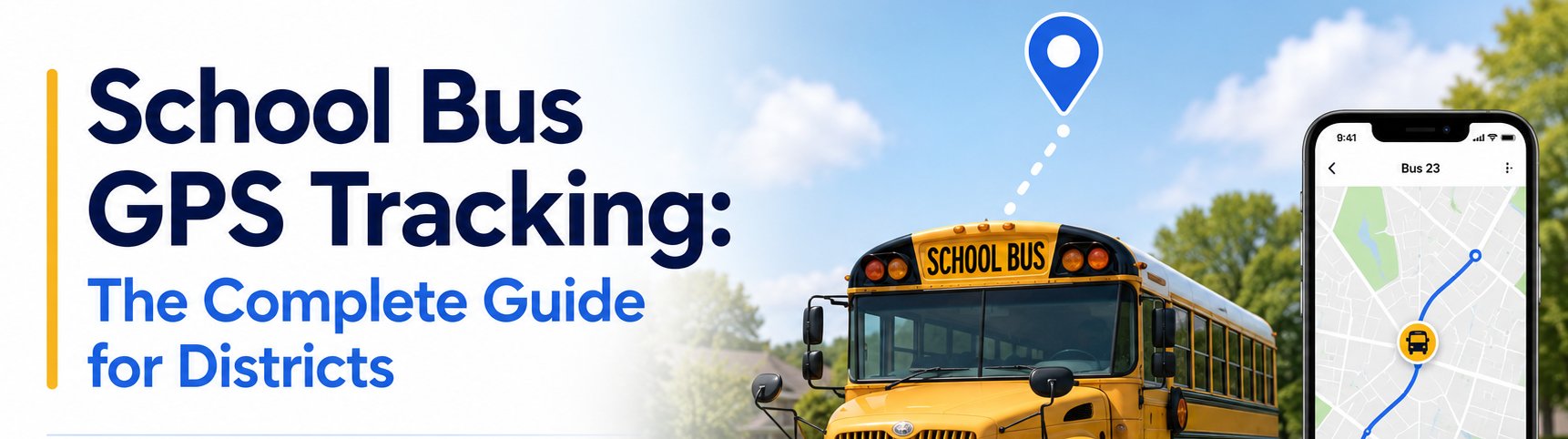
The morning bell rings, but so does the phone in your transportation office-again. Anxious parents want to know where the bus is, and a driver's report of a breakdown leaves you with no real-time visibility. These daily challenges strain resources and raise concerns about the safety of your district’s most precious cargo. This is where modern school bus GPS tracking transforms your operations, moving your department from reactive to proactive. It provides the clarity and control needed to manage your fleet with confidence, ensuring student safety is always the top priority.
This complete guide is designed for school administrators and transportation coordinators ready to solve these persistent issues. We will explore exactly how GPS technology enhances accountability, improves fleet efficiency for significant cost savings, and provides real-time data that gives parents and staff invaluable peace of mind. Discover the steps to implementing a system that delivers safer routes, optimized fuel consumption, and actionable data to make better transportation decisions for your entire district.
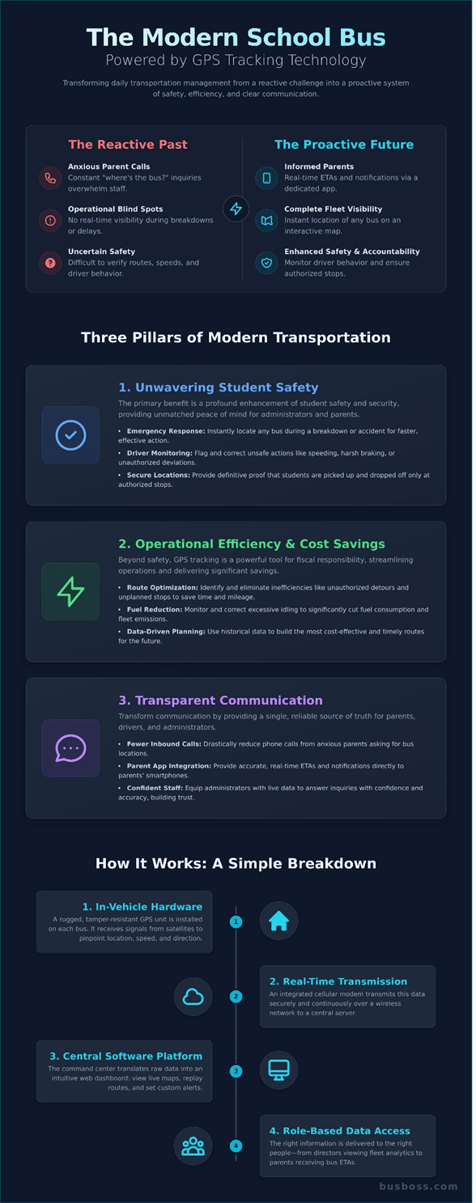
In today's world, school bus GPS tracking is far more than just a moving dot on a digital map. It is a comprehensive safety and logistics platform that provides transportation coordinators with complete, real-time visibility over their entire fleet. While traditional methods like radio dispatches and phone calls once served their purpose, they create communication gaps and operational blind spots that are no longer acceptable when student safety is the top priority. At its core, this system leverages powerful GPS tracking technology to transmit critical data on a vehicle's location, speed, and engine status.
This constant flow of information is essential for modernizing student transportation management. The value it delivers rests on three core pillars: unwavering safety, streamlined operational efficiency, and transparent communication.
The primary benefit is the profound enhancement of student safety. Administrators can instantly locate any bus during an emergency, breakdown, or accident, enabling a faster, more effective response. The system also monitors driver behavior, flagging unsafe actions like speeding or harsh braking to ensure all safety protocols are followed. This technology provides definitive proof that every student, your precious cargo, is picked up and dropped off only at their authorized, secure locations, providing unmatched peace of mind.
Beyond safety, GPS tracking is a powerful tool for fiscal responsibility. Transportation managers can identify and eliminate route inefficiencies, such as unauthorized detours or unplanned stops, to save time and mileage. By monitoring and correcting issues like excessive vehicle idling, districts can significantly reduce fuel consumption and fleet emissions. This historical data becomes an invaluable asset for optimizing future routes, ensuring the most cost-effective and timely service possible.
Finally, this system transforms communication for everyone involved. It drastically reduces the volume of inbound calls from anxious parents asking for their child's bus location. Through a dedicated mobile app, parents receive accurate, real-time ETAs directly on their smartphones. For administrators, having immediate access to live data means they can answer inquiries from parents and staff with confidence and accuracy, building trust and streamlining daily workflows.
At its core, a school bus GPS tracking system is a sophisticated yet straightforward solution designed to provide clarity and control over your transportation operations. It transforms raw location data into actionable intelligence, ensuring every vehicle is accounted for and every student is safe. The entire process relies on three interconnected components: the in-vehicle hardware, the central software platform, and the secure network that connects them.
It's important to distinguish between passive and active systems. Passive trackers store data to be downloaded later, which is insufficient for daily safety management. Modern systems use active, real-time tracking, transmitting data continuously to give transportation managers and parents the immediate updates they need to act with confidence.
The journey begins with a rugged, compact GPS tracking device installed discreetly on each school bus. This unit receives signals from multiple satellites to pinpoint its exact location, speed, and direction of travel. An integrated cellular modem then transmits this data securely over a wireless network to our central servers. For the demanding school bus environment, it is critical that this hardware is durable, reliable, and tamper-resistant to guarantee uninterrupted performance.
Once the raw data reaches our servers, the software platform acts as the system's command center. It translates complex GPS coordinates into an intuitive, web-based dashboard that transportation managers can access from any computer. This is where data becomes powerful. Key features empower your team to:
A fundamental principle of effective GPS tracking for school buses is providing the right information to the right people while protecting student privacy. Access is strictly controlled based on roles:
This tiered access ensures operational transparency for your staff and provides reassuring updates for parents, all while upholding the highest standards of data security for your precious cargo.
Selecting a school bus GPS tracking system requires more than just picking a vendor. Not all platforms are created equal, and the right choice depends on features that directly address the unique safety and efficiency challenges of student transportation. To make a confident decision, districts must prioritize functionalities that streamline operations, enhance security, and provide actionable data.
Consider this checklist to differentiate between essential and secondary features:
Ultimately, the goal is to invest in a system that not only solves today's problems but can also scale with your district's future growth and technological needs.
The foundation of any effective system is live, high-frequency location data. Look for a platform that provides automatic map updates every 30-60 seconds. This allows you to create customizable geofences around schools and depots to receive instant notifications of arrivals or departures. Equally important are configurable alerts for unsafe driving behaviors like speeding, harsh braking, or excessive idling, which empower you to proactively manage driver performance and student safety.
A robust school bus GPS tracking solution moves beyond simple dots on a map; it transforms data into insight. Your system must be able to generate accurate, state-mandated mileage and compliance reports with ease, saving administrative time and ensuring accuracy. Look for features like driver scorecards to identify top performers and route history reports that allow you to compare planned vs. actual paths, helping you optimize for fuel efficiency and on-time performance.
A standalone GPS system creates data silos and operational friction. To maximize your investment, prioritize a platform built for seamless integration. The ability to connect with your existing routing software is non-negotiable, as it ensures planned routes align with real-world execution. Furthermore, look for APIs that can link with your Student Information System (SIS) and support parent-facing mobile apps, creating a connected and transparent transportation ecosystem. See how BusBoss integrates GPS with powerful routing tools.
While a standalone GPS provides a location, its true power is unlocked when it operates within a fully integrated ecosystem. Effective school bus GPS tracking is more than just a dot on a map; it’s the central nervous system of a modern transportation department. By connecting GPS data with routing software and parent communication apps, you create a single source of truth. This ensures everyone-from drivers to dispatchers to parents-operates with the same accurate, real-time information, transforming a simple tracking service into a comprehensive safety and management tool.
Planned routes are an excellent starting point, but real-world data is what makes them truly efficient and reliable. An integrated system uses live GPS data to create a powerful feedback loop, allowing you to continuously refine and optimize your operations. This connection allows your team to:
In today's connected world, transparency is paramount to building trust with your community. When your management platform is connected to a parent app like PARENTpatrol, you provide families with the visibility they need for complete peace of mind. Live GPS data powers accurate, up-to-the-minute ETAs, while automated push notifications can instantly inform parents of any delays, stop changes, or bus substitutions. This proactive communication drastically reduces anxious phone calls to the office and reinforces confidence in your district's commitment to the safety of its precious cargo.
Managing student transportation is complex enough without juggling multiple, disconnected software programs. An integrated platform eliminates dangerous data silos by bringing routing, live fleet tracking, student ridership, and parent communications into a single, intuitive dashboard. This unified view empowers directors to manage routes, monitor fleet performance, and address parent concerns from one central hub. With all critical data in one place, you can make faster, more informed decisions with a complete operational picture.
Successfully deploying a school bus GPS tracking system involves more than just installing hardware in your fleet. A truly effective rollout is a strategic process built on clear communication, comprehensive training, and well-defined goals. Viewing your vendor as a partner is crucial to navigating this process and ensuring the technology delivers on its promise to enhance student safety and operational efficiency.
The most common hurdle in any new fleet technology rollout is driver adoption. To ensure success, communicate the ‘why’ behind the system, focusing on benefits that directly impact them. Frame the technology not as a surveillance tool, but as a system for protection and support.
Involving senior drivers or union representatives in the selection process can also build trust and create advocates for the new system.
Your system is only as good as its configuration and the people using it. Work closely with your vendor to customize alerts and reports that align with your district's specific safety protocols and efficiency goals. Ensure your dispatchers and transportation managers receive thorough training on the software, so they can manage routes with confidence. It's vital to establish clear, documented procedures for how staff should respond to different alerts, from geofence violations to panic button activations.
To demonstrate the value of your investment, it's essential to measure success. Before implementation, benchmark key performance indicators (KPIs). After the system is live, track the improvements. Key metrics often include:
A successful implementation plan is the foundation for maximizing the security and efficiency benefits of school bus GPS tracking. The right partner will guide you through every step of this checklist. Request a demo to see how our SuccessRoute Training and dedicated support ensure your district achieves its goals.
As we've explored, modern school bus GPS tracking is no longer a luxury but an essential component of a safe and efficient transportation department. Moving beyond simple location data, these systems provide the critical visibility and actionable insights needed to optimize routes, improve driver performance, and enhance parent communication. An integrated platform that combines GPS with routing and parent apps creates a powerful ecosystem, ensuring every part of your operation works in harmony for maximum safety and accountability.
Choosing the right partner is paramount. With 25+ years of experience in student transportation, BusBoss is trusted by school districts across the nation to deliver robust and reliable management solutions. We understand that your responsibilities are immense, and our mission is to provide the tools you need to manage them with complete confidence. Ready to see the difference firsthand? Request a Live Demo to see how BusBoss puts safety and efficiency on the map.
Take the definitive step toward a more secure and streamlined future for your transportation department. Because your precious cargo comes first.
The cost of a school bus GPS tracking system varies based on several factors, including the size of your fleet, the specific hardware selected, and the software features you require. Pricing is typically structured as a one-time hardware cost per vehicle followed by a monthly software subscription fee. This model ensures you receive continuous updates and support. For an accurate estimate tailored to your district's unique needs, we recommend requesting a custom quote that reflects your operational goals and budget.
Protecting your data is our highest priority. All information transmitted from GPS devices is encrypted and stored on secure, cloud-based servers with redundant backups. Access to the system is controlled by role-based permissions, ensuring only authorized administrators can view sensitive location data. Our systems are designed to be fully compliant with student privacy regulations like FERPA, giving you complete confidence that your data and your precious cargo are always protected.
Our systems are built with reliability and accountability in mind. If a device is tampered with or loses its primary power source, it will immediately trigger a tamper or power-loss alert that is sent to transportation managers. The software also automatically flags any unit that has not reported data within a set timeframe. This allows your team to proactively address any potential hardware issues, dispatch maintenance, and ensure there are no gaps in your fleet's safety and security oversight.
Absolutely. A comprehensive school bus GPS tracking system automates the collection of essential data for state and federal reporting. It accurately logs mileage, route times, stop locations, and engine hours, eliminating the need for error-prone manual logs. You can generate detailed, accurate reports in just a few clicks, which streamlines the compliance process, ensures you meet all requirements for funding, and saves your administrative staff countless hours of work.
Our GPS devices are engineered to maintain tracking integrity even in rural areas with inconsistent cellular coverage. The hardware utilizes "store and forward" technology. When a bus travels out of a service area, the device continues to record and store location data points internally. As soon as the bus re-enters an area with a cellular connection, it automatically uploads all the stored data to the server. This ensures a complete and uninterrupted history of every route, with no data gaps.
Many school districts find that implementing a GPS tracking solution leads to lower insurance premiums. Insurance providers recognize that features like driver behavior monitoring, speed alerts, and detailed route histories demonstrate a proactive commitment to risk management and safety. By reducing the likelihood of accidents and providing irrefutable data in the event of an incident, GPS tracking can be a powerful tool when negotiating for better insurance rates. We advise discussing these capabilities with your provider.


 Orbit Software, Inc.
424 King Street
Pottstown, PA 19464

 (484) 941-0820