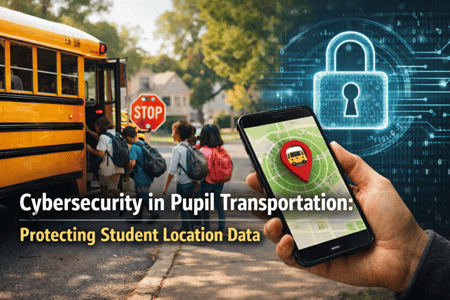
Student location data represents one of the most sensitive information categories that school districts manage. Every GPS ping, every stop assignment, every real-time tracking update creates a digital footprint that, if compromised, can expose children to genuine physical danger. Yet despite these stakes, pupil transportation systems often operate with cybersecurity postures that lag years behind other educational technology investments.
The threat isn't theoretical. In 2023 alone, K-12 institutions experienced over 130 publicly disclosed cybersecurity incidents, with transportation systems increasingly targeted as attack surfaces expand beyond traditional IT infrastructure. When a routing system is breached, attackers don't just access spreadsheets: they gain detailed intelligence about where students live, when they're picked up, which routes they travel, and what time they're alone at bus stops.
This comprehensive guide examines the cybersecurity landscape facing pupil transportation operations, establishes a zero-trust framework specifically designed for mobile student tracking systems, and provides actionable strategies that transportation directors can implement regardless of budget constraints.
Unlike classroom management systems or grade portals that operate within school network perimeters, transportation systems function as mobile attack surfaces. GPS-enabled buses move through communities transmitting location data continuously. Tablets in driver hands connect to cellular networks. Parent tracking apps ping servers thousands of times daily. Each connection point represents a potential vulnerability.
 Why Transportation Data Is Valuable to Attackers
The question districts must ask isn't whether their systems are attractive targets, but rather why they're attractive:
Personally Identifiable Information (PII) Concentration: A single routing database contains names, home addresses, school locations, guardian contact information, and travel patterns for thousands of children. This data concentration makes transportation systems high-value targets for identity theft operations and more sinister purposes.
Operational Intelligence: Attackers conducting physical surveillance can use compromised location data to identify patterns, plan timing, and understand which students travel alone versus in groups: information that has no legitimate use outside authorized transportation operations.
Ransomware Leverage: Districts can recover from many system compromises, but threats to publish student location data or disrupt morning transportation create immense pressure for rapid ransom payment. Transportation systems represent critical infrastructure that districts cannot operate without, even temporarily.
Supply Chain Access: Breaching a school's transportation system can provide lateral movement opportunities into broader district networks, particularly when routing platforms integrate with student information systems (SIS), financial systems, and HR databases.
Research published by educational cybersecurity firms indicates that schools implementing layered security protocols reduce data breach risk by 89% while maintaining FERPA compliance. However, achieving this protection requires understanding specific threat vectors unique to pupil transportation.
1. GPS System Manipulation and Spoofing
GPS signals are remarkably easy to disrupt or falsify. GPS spoofing attacks involve broadcasting false location coordinates that override legitimate satellite signals, potentially causing buses to appear in incorrect locations or masking their actual positions during specific route segments.
More commonly, GPS jamming uses radio frequency interference to prevent devices from receiving satellite signals entirely. While jammers are illegal, they're inexpensive and readily available. A jammer placed near a bus yard or along a route can blind tracking systems, creating operational chaos and eliminating evidence of bus locations during critical time windows.
2. Routing Software Exploitation
Transportation management platforms aggregate extraordinary amounts of sensitive data: every student's home address, every stop location, special needs accommodation notes, guardian custody arrangements, and disciplinary flags. These systems often integrate with:
Each integration expands the attack surface. If any connected system lacks adequate security, attackers can pivot laterally into the routing platform. Furthermore, many districts run routing software on-premises with inadequate network segmentation, allowing compromised workstations to access transportation databases directly.
3. Unsecured Bus Wi-Fi Networks
Districts increasingly provide Wi-Fi connectivity on buses for extended routes. These networks frequently lack sophisticated security measures:
When bus Wi-Fi networks are compromised, attackers can potentially access onboard computers, intercept communications between the bus and dispatch, or use the bus as a mobile access point for broader network infiltration.
4. IoT Device Vulnerabilities
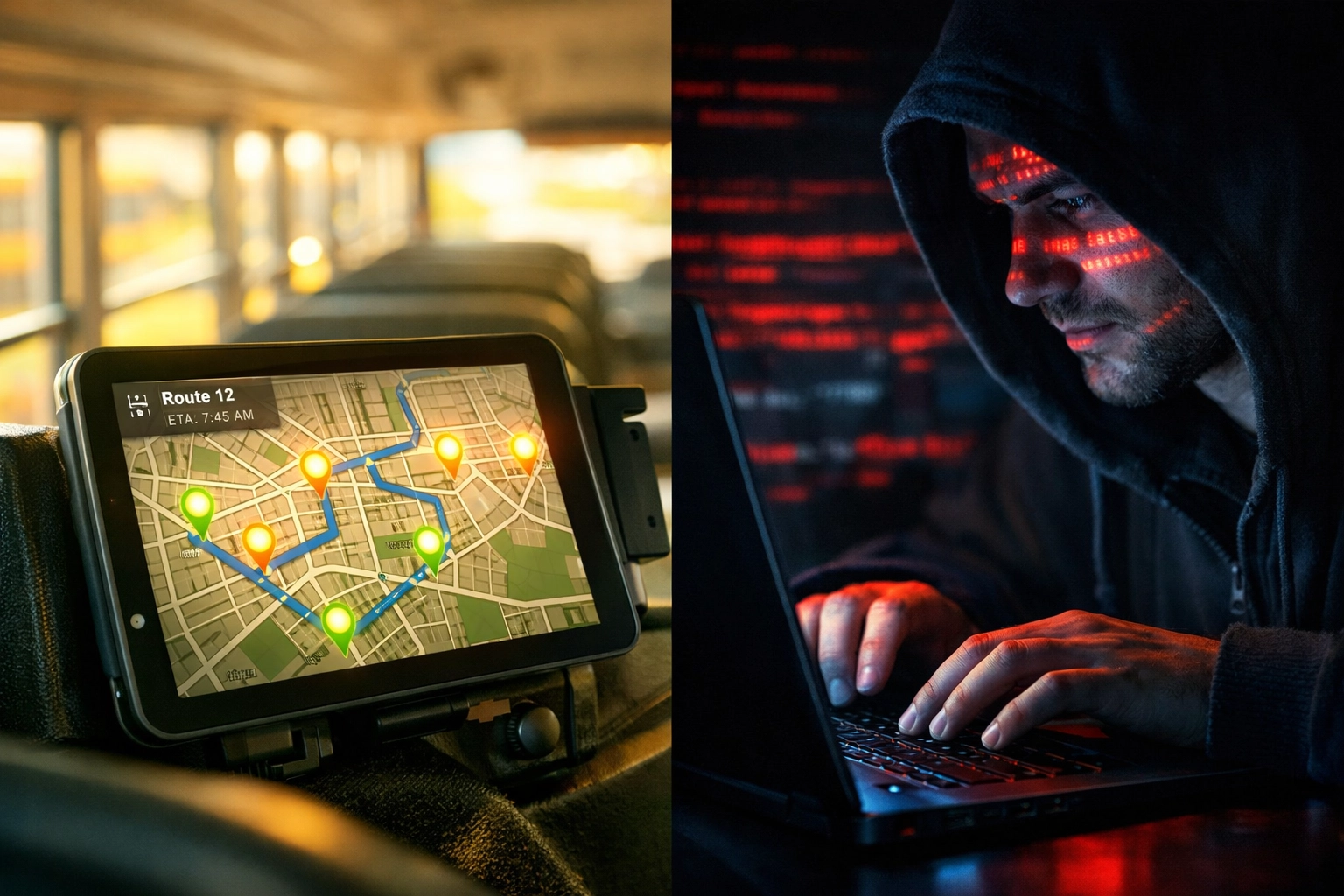
Modern pupil transportation relies on Internet of Things (IoT) devices: GPS trackers, interior cameras, exterior cameras, telematics modules, student identification card readers, and automated stop-arm cameras. Each device represents another potential entry point.
IoT manufacturers often prioritize functionality over security. Devices ship with:
Because these devices operate in physically accessible locations (mounted on buses, installed at stops), they face additional risks from tampering. An attacker with brief physical access can compromise hardware, install malicious firmware, or attach intercepting devices.
5. Cellular Tower Spoofing (IMSI Catchers)
Buses communicate with dispatch and tracking servers via cellular networks. In areas with sparse tower coverage: common in rural districts: attackers can deploy IMSI catchers (also called "Stingrays"), which impersonate legitimate cell towers. When a bus's communication equipment connects to the fake tower, attackers can:
While IMSI catchers are typically associated with law enforcement surveillance, the equipment is commercially available and has been used in criminal operations.
6. Third-Party Vendor Risk
Most districts don't develop transportation software internally: they purchase platforms from vendors and integrate multiple specialized tools. This dependency creates supply chain risk. A breach of the vendor's systems can compromise all their clients simultaneously.
Notable vendor-related concerns include:
7. Insider Threats and Social Engineering
Not all threats originate externally. Insider risks include:
Transportation departments typically have smaller teams than other district functions, creating environments where "everyone has access to everything" for convenience: a practice that eliminates defense-in-depth protections.
Understanding cybersecurity obligations requires navigating multiple regulatory frameworks:
FERPA (Family Educational Rights and Privacy Act)
FERPA protects student education records, which explicitly include transportation information. Districts must:
FERPA violations can result in loss of federal funding: an existential threat for most districts.
COPPA (Children's Online Privacy Protection Act)
When districts deploy parent tracking apps or student-facing transportation tools, COPPA applies if the service collects personal information from children under 13. Requirements include:
State Data Privacy Laws
States increasingly enact student data privacy legislation with requirements exceeding federal minimums. California's Student Online Personal Information Protection Act (SOPIPA), New York's Education Law 2-d, and similar statutes in other states impose specific obligations on districts and vendors regarding student data collection, use, and protection.
Zero-Trust Architecture for Pupil Transportation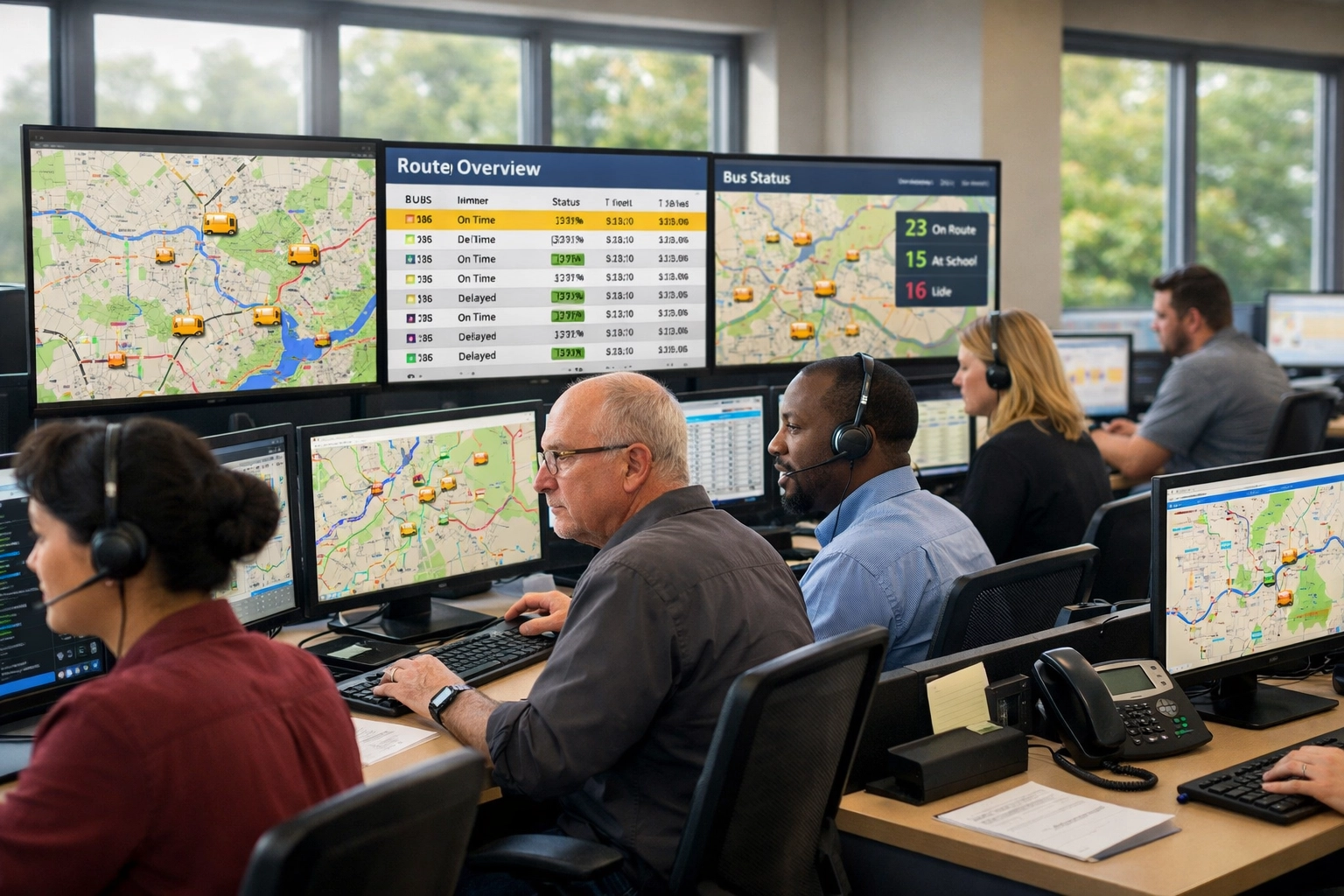
Traditional network security operates on a "castle and moat" model: strong perimeter defenses with implicit trust for anything inside. This approach fails for transportation systems where buses operate outside the perimeter, users access systems remotely, and integrations pierce the firewall constantly.
Zero-trust architecture assumes breach is inevitable and enforces continuous verification. The core principles applied to pupil transportation:
1. Verify Explicitly
Every access request: whether from a transportation coordinator's workstation, a driver's tablet, or a parent's phone: requires authentication and authorization based on all available data points:
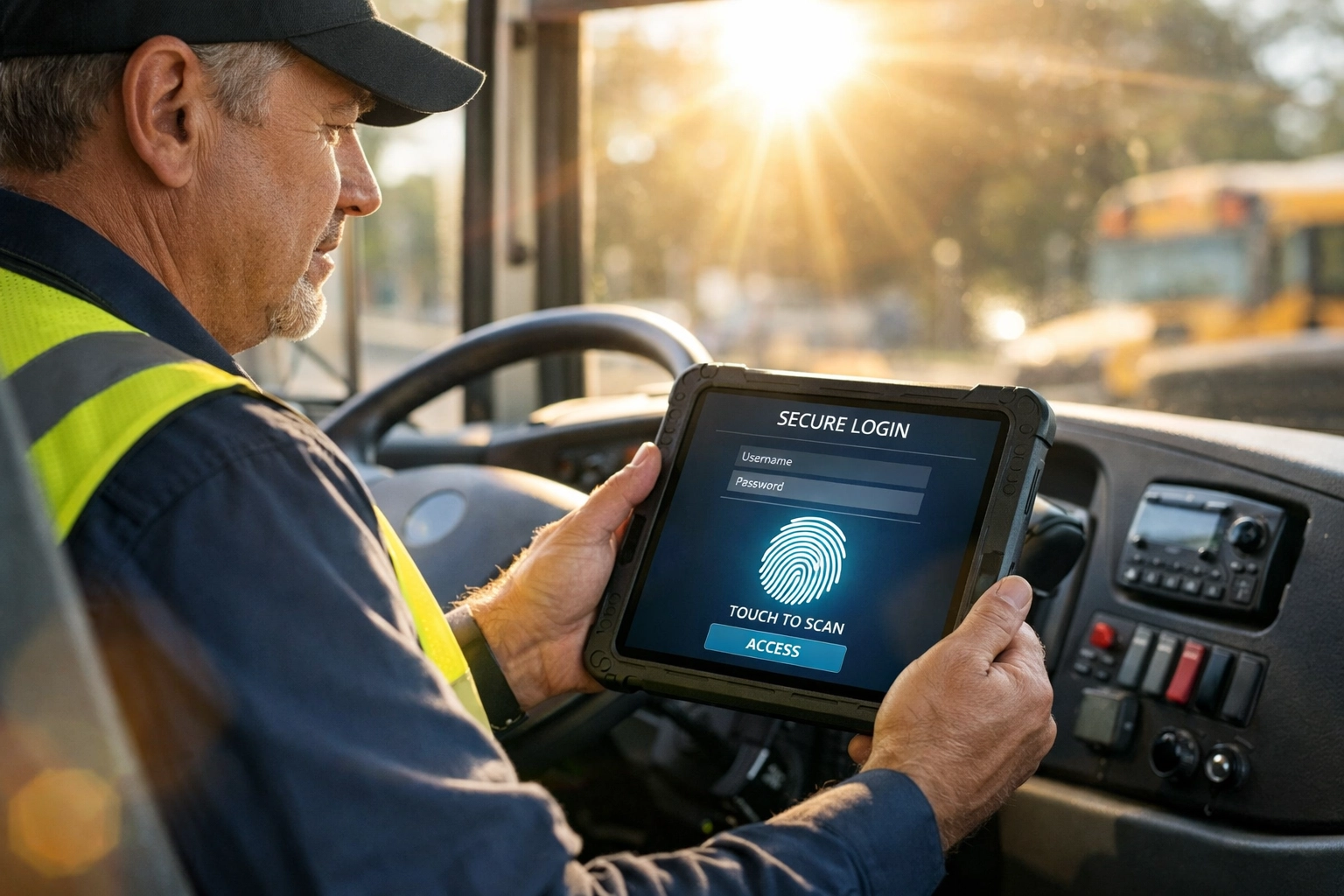
Implementation requires moving beyond username/password combinations to multi-factor authentication (MFA) universally. For transportation systems, this might include:
2. Use Least Privilege Access
Every user and system component should have the minimum access required for their function, nothing more. For transportation operations, this means:
Implementing least privilege requires role-based access control (RBAC) with granular permissions. Modern platforms should support defining roles precisely rather than offering only "administrator" or "user" options.
3. Assume Breach
Design systems assuming attackers will gain some level of access. This defensive assumption drives several protective strategies:
Micro-segmentation: Rather than placing all transportation systems on a single network segment, create software-defined perimeters isolating different functions. GPS tracking data flows through different network segments than routing modifications. Parent communications operate in isolated environments from administrative databases.
Data encryption everywhere: Protect data at rest, in transit, and in use:
Continuous monitoring: Deploy security information and event management (SIEM) tools that aggregate logs from all transportation systems, correlate events, and trigger alerts for suspicious patterns. For transportation specifically, monitor:
Effective cybersecurity requires defense in depth: multiple overlapping protective layers ensuring that single-point failures don't result in complete compromise.
Firewall Configuration: Transportation systems require carefully crafted firewall rules:
Virtual Private Networks (VPNs): Remote access to transportation systems should tunnel through VPNs using:
Network Segmentation: Separate transportation systems from other district networks using VLANs or physical separation:
Every device accessing transportation systems: workstations, tablets, phones: must be hardened:
Endpoint Detection and Response (EDR): Deploy EDR solutions that:
Mobile Device Management (MDM): For tablets and phones used by drivers and staff:
Operating System Hardening:
Secure Development Practices: If districts develop custom transportation tools or integrate systems, follow secure coding principles:
Vendor Security Requirements: When purchasing transportation platforms, require vendors demonstrate:
API Security: Transportation systems increasingly expose APIs for integrations. Secure these interfaces through:
Encryption Key Management: Encryption provides no protection if keys are compromised. Implement:
Data Loss Prevention (DLP): Configure DLP tools to prevent unauthorized exfiltration of student location data:
Secure Data Disposal: When buses are decommissioned, devices replaced, or old databases retired:
Transportation systems rely on vendor ecosystems. Managing this risk requires deliberate processes:
Before selecting a transportation platform or service provider, evaluate:
Security Posture Questions:
Contractual Security Requirements:
Security assessment isn't one-time; it's continuous:
Each connection between systems represents an attack vector:
API Gateway Pattern: Route all integrations through an API gateway that:
Minimal Data Sharing: Share only data absolutely required for integration functionality. If a parent communication app needs student names and route assignments, don't also share birth dates, addresses, and phone numbers.
Integration Monitoring: Configure alerts for:
Despite best efforts, breaches occur. Having a documented, tested incident response plan specific to transportation system compromises is essential.
Phase 1: Preparation
Phase 2: Detection and Analysis
Phase 3: Containment
Phase 4: Eradication
Phase 5: Recovery
Phase 6: Post-Incident Review
Different regulations impose varying breach notification requirements:
FERPA Requirements: Districts must notify parents of unauthorized access to or disclosure of education records, though FERPA doesn't specify timelines. However, state laws or district policies may establish specific notification windows.
State Breach Notification Laws: Most states require notification to affected individuals within specific timeframes (commonly 30-60 days of discovery). Requirements vary by state regarding:
Law Enforcement Considerations: Districts should evaluate whether to report incidents to law enforcement. While not always required, reporting may:
Technical controls provide necessary protection, but culture determines whether those controls remain effective. Transportation departments can foster security awareness through:
Role-Specific Training: Different stakeholders need different knowledge:
Ongoing Awareness: Security training isn't annual compliance: it's continuous:
Identify transportation staff interested in cybersecurity and develop them as "security champions":
Make the secure choice the easy choice:
What gets measured gets managed. Track and report:
Share these metrics with district leadership to demonstrate both the importance of continued investment and the effectiveness of security programs.
Modern transportation management platforms must be architected with security as foundational, not an afterthought. The BusBoss platform addresses many vulnerabilities discussed in this guide through:
Centralized Data Governance: By serving as the authoritative system of record for transportation operations, BusBoss reduces "shadow systems" where routing data duplicates across spreadsheets and disconnected tools: each representing another security risk.
Role-Based Access Controls: Districts can implement granular permissions ensuring drivers see only their assigned routes, dispatchers access operational data without student home addresses, and administrative staff manage only their authorized functions.
Integration Security: When connecting BusBoss to SIS platforms, GPS tracking systems, and parent communication tools, controlled integration points enable monitoring and logging of data flows while minimizing exposure of sensitive information.
Audit Trails: Comprehensive logging of system access and modifications creates evidence necessary for security investigations and compliance verification. Who changed which route, when, and from which device?
Secure Architecture Options: Whether deployed on-premises with district-controlled security or through secure hosting arrangements, BusBoss supports architectures aligned with district security policies and capabilities.
However, no platform eliminates all risk. Technology is one component of a comprehensive security program that must also include policies, training, vendor management, and continuous improvement.
Improving transportation cybersecurity doesn't require transforming operations overnight. Start with high-impact foundations and build systematically.
Protecting student location data isn't a separate initiative from operating safe, efficient transportation: it's inseparable from it. Parents trust districts with their children's safety. That trust extends to the digital systems tracking where students are, when they travel, and how they get to school.
The threat landscape will continue evolving. New attack techniques will emerge. Technology will advance. But the fundamental principle remains constant: student safety requires protecting not just the physical buses and stops, but also the data flowing through the systems making modern transportation possible.
Districts that treat cybersecurity as foundational: not an afterthought or compliance checkbox: will build transportation operations resilient to inevitable attacks. Those that delay face not just technical breaches, but erosion of community trust that can take years to rebuild.
The good news: improving transportation cybersecurity doesn't require starting from scratch. Most districts already have pieces in place. The work involves connecting those pieces systematically, addressing critical gaps first, and building security into daily operations rather than treating it as a separate concern.
Ready to strengthen your transportation security posture? Start with the 30-day quick wins outlined above. Document your current state, identify your highest risks, and take action on the most critical vulnerabilities first. Whether your district is just beginning to address transportation cybersecurity or looking to mature an existing program, systematic implementation of these strategies will protect the students you serve and the community that depends on you.
For districts seeking comprehensive transportation management platforms architected with security as a core principle, explore how BusBoss approaches data protection and operational security.
Student safety extends far beyond seat belts and stop arms. It includes the invisible infrastructure of data systems that make modern transportation work. Protect it accordingly.


 Orbit Software, Inc.
424 King Street
Pottstown, PA 19464

 (484) 941-0820