For any transportation director, the daily juggle of dispatching, ensuring compliance, and managing driver morale can feel like an endless challenge. High turnover rates and recruitment difficulties only add to the pressure, making it difficult to maintain the consistent, high standards your district demands. Effective school bus driver management is more than just a line item on a budget; it's the cornerstone of a safe, reliable, and efficient transportation system that parents and administrators trust.
This comprehensive guide provides the actionable strategies you need to move from reactive problem-solving to proactive leadership. We will explore proven methods to reduce turnover, streamline communication, and use data to evaluate performance objectively. By implementing these tools, you can build a stable and professional team, improve your district's safety record, and create a positive work environment where drivers feel valued, ensuring your precious cargo always comes first.
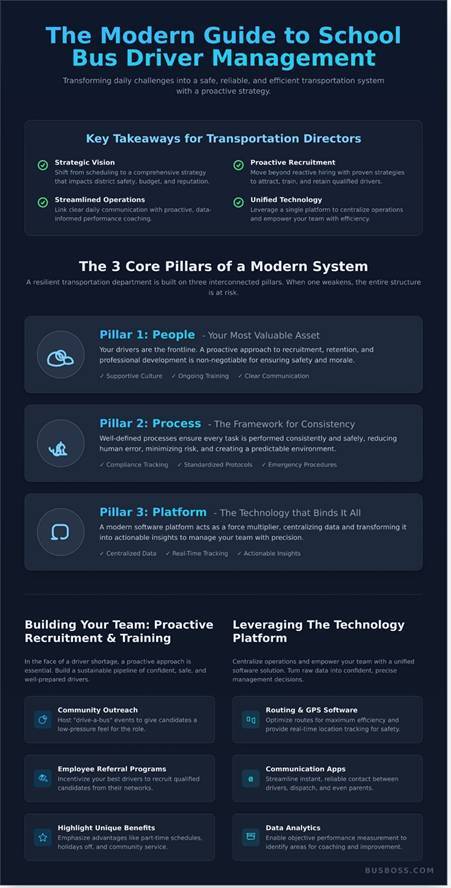
Effective school bus driver management extends far beyond daily dispatch logs and route assignments. It is a comprehensive strategy that directly impacts student safety, operational budgets, and your district's reputation within the community. A breakdown in management doesn't just cause delays; it can compromise the well-being of your precious cargo. To build a resilient and efficient transportation department, you must focus on three interconnected pillars: People, Process, and Platform. When one pillar weakens, the entire structure is at risk.
Your drivers are the frontline of your transportation operation. In the face of a nationwide driver shortage, a proactive approach to recruitment, retention, and professional development is non-negotiable. This means creating a positive and supportive culture where drivers feel valued, heard, and equipped for success. Investing in your people through ongoing training and clear communication not only improves morale but also ensures the highest standards of safety and professionalism are met on every route.
Well-defined processes create a reliable framework that ensures every task is performed consistently and safely. This includes everything from rigorous compliance tracking for licenses and certifications to standardized pre-trip inspection protocols and emergency procedures. Without clear, documented processes, your operation is vulnerable to human error and inefficiency. Establishing these standards is fundamental to managing the complexities of modern school bus operations and safety, reducing risk, and creating a predictable, secure environment for students and staff.
Technology is the force multiplier that integrates your people and processes. A modern software platform centralizes critical driver information, from schedules and route assignments to compliance data and performance metrics. Key technologies that form this pillar include:
This platform transforms raw data into actionable insights, empowering you to manage your team with confidence and precision.
Effective school bus driver management begins long before the first route is driven-it starts with building a reliable, professional team. In the face of a persistent national driver shortage, transportation departments can no longer afford a reactive hiring process. Shifting to a proactive recruitment and comprehensive training model is essential for ensuring every bus is staffed with a confident, safe, and well-prepared driver responsible for your district's precious cargo.
Finding qualified candidates requires looking beyond traditional job postings. A proactive approach involves engaging directly with your community and highlighting the unique advantages of the role. Consider implementing strategies that build a sustainable pipeline of talent:
A confident driver is a safe driver. Onboarding must extend far beyond basic vehicle operation and route memorization. A truly effective program equips drivers to handle the complexities of the job. To build a robust program, districts can leverage resources like the comprehensive school bus driver training curriculum provided by the NHTSA, which covers critical topics from student management to emergency protocols. Modern onboarding should also include hands-on training for new technology, such as driver apps for navigation, student check-ins, and communication.
Maintaining a team of qualified drivers is an ongoing responsibility. Manually tracking Commercial Driver's Licenses (CDLs), physicals, endorsements, and other certifications is a complex task where errors can have serious consequences. This is a critical area where dedicated school bus driver management software provides immense value. These platforms can automate the entire process, sending alerts to both managers and drivers for upcoming renewals. This ensures full compliance and frees up administrative time to focus on continuous improvement through regular safety and procedural refresher courses.
The morning rush is the ultimate test for any transportation department. Juggling last-minute route changes, unexpected driver absences, and a flood of parent inquiries can quickly lead to operational chaos. Inefficient manual processes result in tangible losses: wasted fuel from poorly assigned routes, lost time for dispatchers, and rising frustration for parents awaiting accurate information. Effective school bus driver management hinges on moving away from fragmented spreadsheets and phone tag toward a centralized platform.
Creating a single source of truth-where all route, driver, and student data resides-empowers your team to make informed, proactive decisions with confidence, ensuring every day runs as smoothly and safely as possible.
Manual driver assignment on a whiteboard is a recipe for error and inefficiency. Modern software transforms this process by centralizing driver data. Dispatchers can instantly view driver availability, manage time-off requests, and assign qualified substitutes with a few clicks. When a driver calls in sick, the system can identify available drivers who are certified for specific routes or vehicle types, a key component of tracking the ongoing professional development for school bus drivers. This ensures compliance and minimizes service disruptions for your precious cargo.
Relying on personal cell phones for communication creates significant safety and liability risks, from distracted driving to privacy concerns. A dedicated driver app provides a secure, reliable alternative. The benefits are immediate and clear:
Coordinating non-regular routes like field trips and athletic events presents a unique logistical challenge. A robust school bus driver management tool streamlines this entire workflow. It can automate driver bidding based on seniority or other district rules, ensuring a fair and transparent assignment process. Once a driver is assigned, the system provides them with the complete trip manifest and optimized, turn-by-turn directions directly on their device, eliminating confusion and improving on-time performance.
In transportation management, you can't improve what you don't measure. An effective school bus driver management strategy moves beyond a reactive, punishment-based model and toward a proactive system of coaching and continuous improvement. By leveraging objective data, you can transform difficult conversations into constructive coaching sessions, directly linking driver performance to enhanced student safety and greater operational efficiency. This data-driven approach builds trust and empowers drivers to become partners in safety.
To gain a clear, unbiased view of performance, transportation managers must track the right key performance indicators (KPIs). Modern tools provide accurate data on the most critical aspects of a driver's daily responsibilities, including:
Raw data becomes powerful when used to guide improvement. With individual driver scorecards, you can easily identify patterns and pinpoint specific opportunities for coaching. Instead of general feedback, you can review specific telematics events, such as "Let's look at the hard-braking incident at 3:15 PM on Oak Street," to discuss defensive driving techniques. This allows for the creation of personalized improvement plans that address the root cause of any issues and help struggling drivers succeed.
A comprehensive performance program also celebrates excellence. Recognizing and rewarding top performers for outstanding safety records, perfect attendance, or consistent on-time performance boosts morale and reinforces your commitment to a positive safety culture. Implementing team-based safety goals can foster healthy competition and camaraderie. A strong recognition program not only motivates your team but is also a proven tool for reducing costly driver turnover. See how BusBoss helps you track performance and improve safety.
Managing driver qualifications, daily routes, and performance metrics can be a fragmented and time-consuming process. Modern software platforms consolidate these disparate tasks into a single, powerful system, transforming how transportation departments operate. By integrating routing, GPS tracking, and personnel data, technology empowers directors with the tools to streamline operations, enhance safety, and manage their teams with confidence.
This integrated approach provides a complete, 360-degree view of your transportation ecosystem. Instead of juggling spreadsheets, paper files, and separate software, you gain a unified command center where every piece of information works together to optimize performance and ensure the safety of your precious cargo.
A dedicated software platform serves as the single source of truth for all driver-related information. It eliminates redundant data entry and ensures that administrators are always working with the most current records. This centralized database is the foundation for efficient and compliant school bus driver management.
Effective management also means equipping your drivers with the tools they need to succeed on the road. Mobile applications connect drivers directly to the central system, improving communication and accuracy. This direct link ensures they have real-time information to perform their duties safely and efficiently.
GPS tracking offers far more than a simple dot on a map. When integrated with a management platform, telematics data provides deep insights into driver behavior and vehicle performance. This visibility is crucial for verifying service, investigating incidents, and proactively coaching drivers to uphold the highest safety standards.
By bringing these elements together, a comprehensive platform like BusBoss provides the control and insight necessary for superior school bus driver management. It transforms reactive problem-solving into proactive, data-driven leadership.
Effective leadership in student transportation is about building a robust framework that supports your team and prioritizes safety at every turn. By focusing on proactive recruitment, consistent training, and clear communication, you create a culture of excellence. Ultimately, a modern approach to school bus driver management integrates these crucial human elements with powerful technology to streamline operations and enhance oversight, ensuring every student’s journey is a safe one because your precious cargo always comes first.
Putting this comprehensive system into practice requires a partner with proven expertise. With over 25 years of experience in student transportation, BusBoss is trusted by hundreds of school districts to deliver a comprehensive solution for routing, GPS, and management. We understand the challenges you face and have dedicated our work to solving them with confidence and reliability.
Ready to see the difference a dedicated partner can make? Request a live demo to see how BusBoss can transform your driver management. Take the first step toward building a more confident, efficient, and secure transportation system for your community.
The most effective strategy combines technology-driven efficiency with a focus on driver retention. By using advanced routing software to optimize routes, districts can often reduce the total number of buses and drivers needed. Simultaneously, providing drivers with modern tools, clear communication channels, and fair performance metrics improves job satisfaction. This dual approach helps you manage with fewer resources while making your district a more attractive place to work, boosting both recruitment and retention efforts.
Implementing a dedicated communication platform is essential for safe, real-time contact. Unlike standard cell phones, these systems offer features like secure, one-touch messaging and push-to-talk capabilities that minimize distraction. Transportation managers can send instant updates about route changes or emergencies directly to an in-cab device. This ensures drivers receive critical information without taking their eyes off the road or their hands off the wheel, always prioritizing the safety of their precious cargo.
Specialized software is critical for streamlining compliance management. It acts as a secure, centralized database for all driver qualifications, including CDL renewals, medical certificates, and training completion records. The system automates the process by tracking expiration dates and sending timely alerts to both administrators and drivers. This proactive approach prevents costly lapses in certification, simplifies audit preparation, and ensures your operation remains fully compliant with all Department of Transportation (DOT) regulations at all times.
The most critical safety metrics are those that provide leading indicators of risk. Using telematics and GPS data, you should track events like harsh braking, rapid acceleration, speeding incidents, and significant route deviations. Monitoring these behaviors allows you to identify patterns and provide targeted coaching before an accident occurs. This data-driven approach moves safety management from being reactive to proactive, creating a culture of continuous improvement and protecting every student on board.
The key is transparent communication focused on safety and support, not surveillance. Clearly explain that the system’s primary purpose is to protect students and exonerate drivers from false accusations. Frame the data as a tool for professional development and positive reinforcement, such as recognizing top-performing safe drivers. When drivers understand that the goal is to help them succeed and ensure safety for all, it fosters trust and collaboration rather than resentment and anxiety.
The best process is a data-driven one that combines multiple sources for a holistic view. An effective school bus driver management system uses objective telematics data, such as on-time performance and safety event metrics, alongside records of completed pre-trip inspections and communication logs. This removes subjectivity from evaluations, allowing for constructive, fact-based conversations that help drivers understand their performance and identify areas for professional growth, ensuring fairness and consistency across your entire team.


 Orbit Software, Inc.
424 King Street
Pottstown, PA 19464
 (484) 941-0820